 SINOVO
Uruguayan Geotechnical & Infrastructure Context
Analyzing the intersection of macro-economic development, local soil mechanics, and deep foundation engineering requirements in South America.
Uruguay’s Industrial Growth & Piling Challenges
Uruguay is experiencing a significant phase of infrastructural modernization. Strategic developments such as the expansion of the Port of Montevideo, the Central Railway (Ferrocarril Central) modernization project, pulp mill infrastructure expansions (including UPM 2), and clean energy wind farms in regions like Tacuarembó demand high-reliability foundation installations.
The geological profile of Uruguay presents diverse challenges. From the soft alluvial clays and silts near the Río de la Plata basin to the crystalline, extremely hard basaltic rock layers prevalent in northern Uruguay, civil engineers face opposing soil profiles. The presence of high water tables along coastal regions makes uncontrolled borehole drilling impossible without robust casing support.
The Role of Casing Oscillators
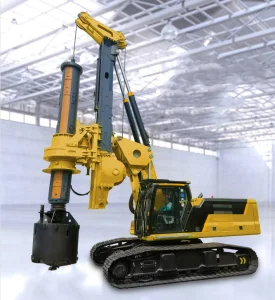
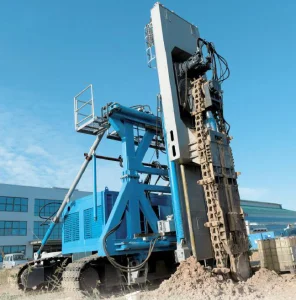
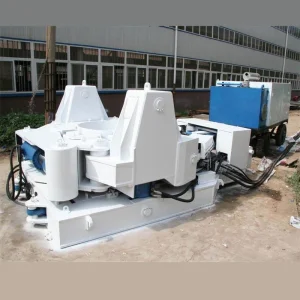
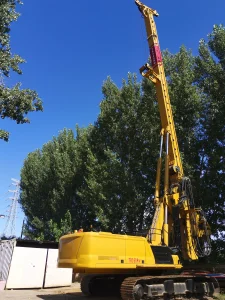
To mitigate borehole collapse and water ingress, modern constructors are transitioning from bentonite slurry methods to full casing systems. A Casing Oscillator, working in tandem with a rotary drilling rig, clamps, oscillates, and drives temporary steel casings into the earth. This mechanical technique prevents geological shifting and protects the integrity of the pile without damaging surrounding structures.
Additionally, Uruguay's strict environmental regulations (enforced by the Ministry of Environment) restrict the disposal of chemical drilling fluids. Using casing oscillators permits dry-hole boring or mechanical soil extraction, minimizing ecological footprints near crucial aquifers and municipal zones.
Global Business & Industrial Overview
Globally, the deep foundation sector is leaning heavily towards safety, minimized vibration, and structural precision. High-torque casing oscillators (such as the SINOVO SWC series) are the preferred choice for executing secant pile walls, retaining barriers, and high-capacity bridge foundations in metropolitan landscapes. By combining massive clamping forces with low-frequency high-amplitude oscillation, these machines allow operators to drive casings through obstructions, old concrete structures, and boulder-rich strata that would derail standard augering configurations.