 SINOVO
1 / 1
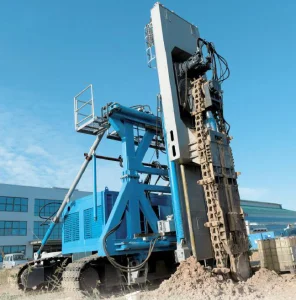
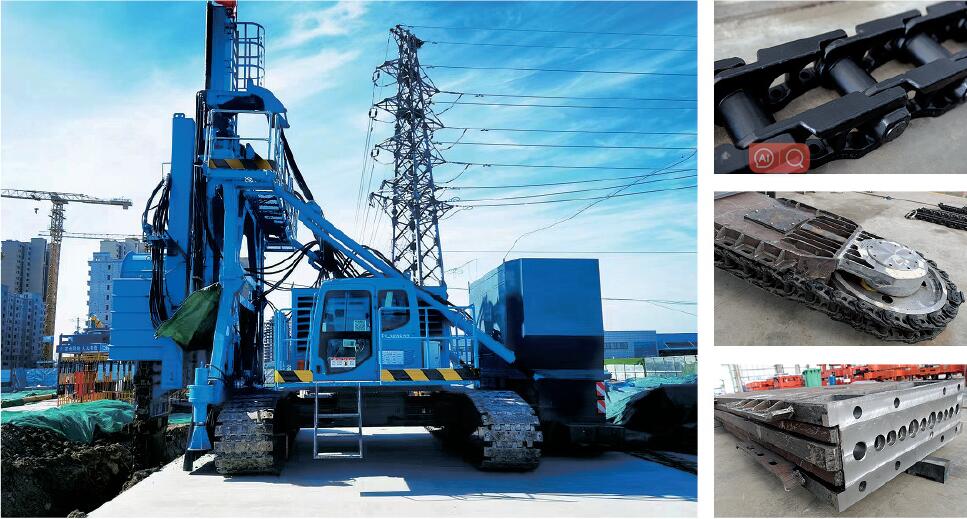
After the chain-blade cutting tool is cut vertically and continuously to the design depth, it is pushed horizontally and injected with cement slurry to form a continuous, equal thickness and seamless cement wall.
Insert core material (H-shaped steel, etc.) into the cement mixing wall of equal thickness to form a composite retaining and water stop structure.
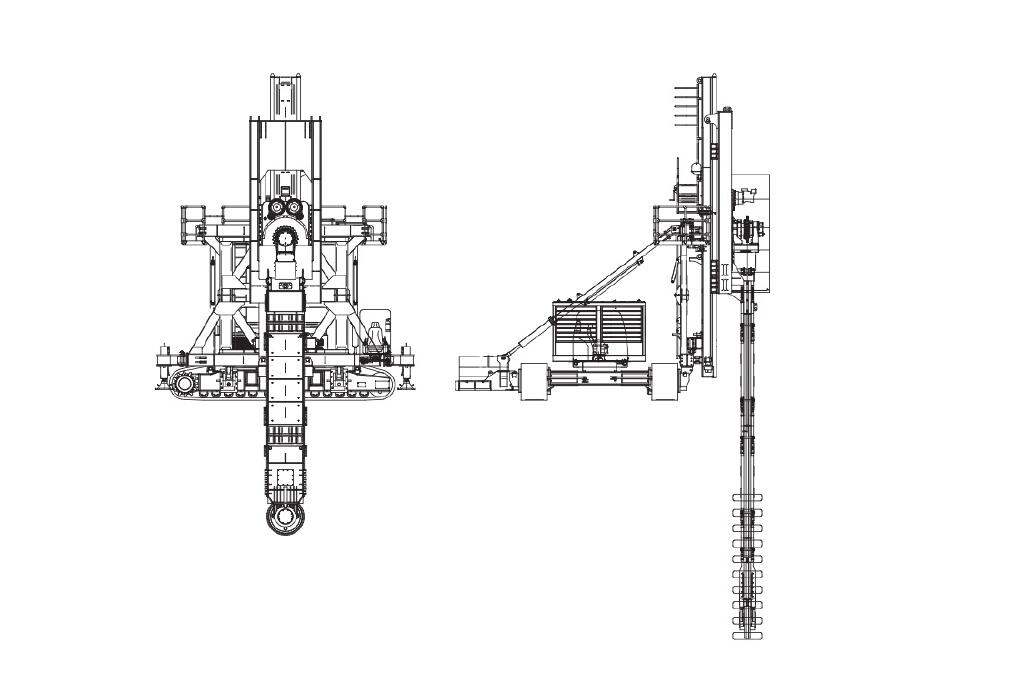
| TRD Main Technical Parameters | |||||
| Part | Project | Unit | TRD7095 | TRD4585 | Remarks |
| Dynamic Parameters | Engine power | KW | 418 (1800rpm) | 257 (1850rpm) | Standard |
| Motor power | KW | 90*3+6 | 90*2+55+6 | 380V, 50HZ, Optional Configuration | |
| System pressure | Mpa | 34.3 | 34.3 | - | |
| Cutting Parameters | Cutting force | KN | 355 | 355 | - |
| Standard cutting depth | m | 70 | 45 | - | |
| Cutting width | mm | 550-950 | 550-850 | - | |
| Cutting speed | m/min | 0-72 | 0-72 | - | |
| Lifting stroke | mm | 4550 | 4550 | - | |
| Lifting force | KN | 2235 | 2235 | - | |
| Lateral travel | mm | 1200 | 1200 | - | |
| Transverse force | KN | 1526 | 1180 | - | |
| Tilt cylinder stroke | mm | 1000 | 1000 | - | |
| Column tilt angle | ° | ±5 | ±5 | - | |
| Gantry tilt angle | ° | ±6 | ±6 | - | |
| Machine Parameters | Operating Weight | t | Approx. 120 | Approx. 105 | - |
| Overall dimension | mm | 10228*7336*10628 | 9058*7030*10500 | - | |
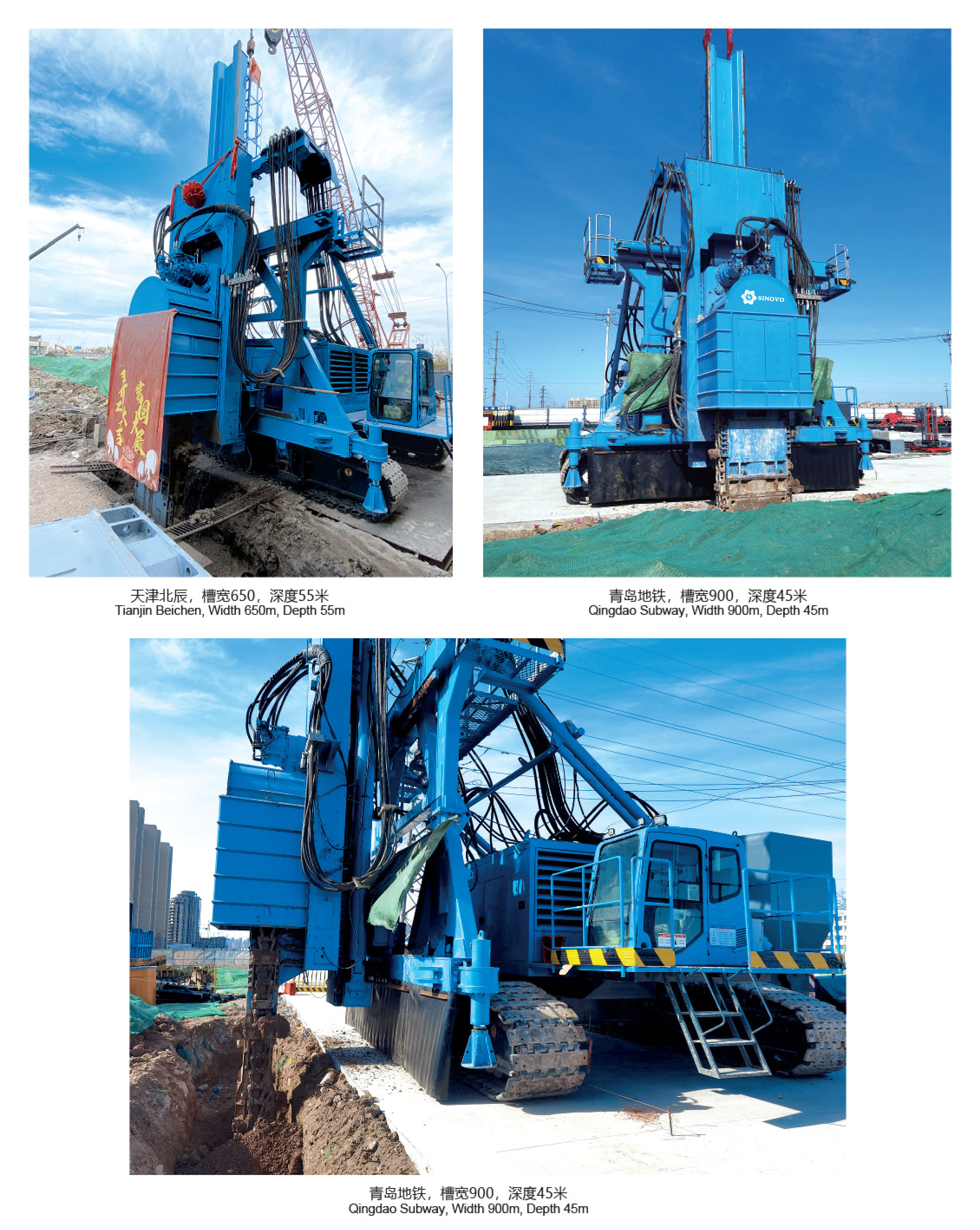
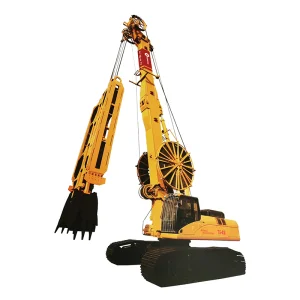
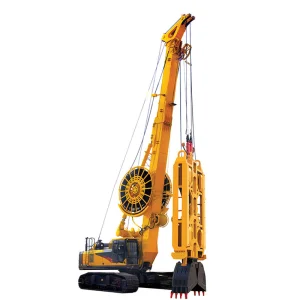
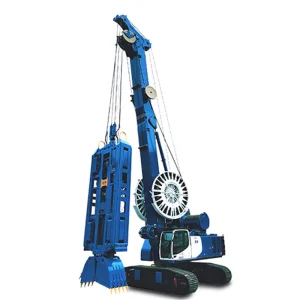
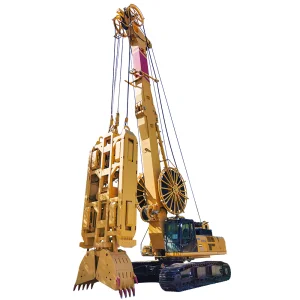
The TRD (Trench cutting Re-mixing Deep wall) method uses a chain-blade cutting tool to cut vertically and continuously to the design depth. It is then pushed horizontally while injecting cement slurry to form a continuous, seamless cement wall of equal thickness. Finally, core materials such as H-shaped steel are inserted to create a composite water-stop and retaining wall structure.
This method is highly applicable to clay, sand, gravel, and gravel layers. It also shows excellent performance in dense sand layers with standard penetration values of 30-60, and soft rock with a saturated uniaxial compressive strength of up to 10 MPa.
The finished wall depth can reach up to 70 meters. The verticality deviation is controlled to not exceed 1/250. When used specifically for inner and outer trench wall reinforcement of ground walls, the verticality deviation can be controlled to not exceed 1/300.
The TRD method can construct walls with thicknesses ranging from 550 mm to 950 mm, providing excellent flexibility for different structural requirements.
The TRD wall provides outstanding water resistance. In sandy soil, the permeability coefficient of the wall can reach as low as 1x10⁻⁶ cm/s to 1x10⁻⁷ cm/s, ensuring exceptional seepage control.
The construction machinery has a low overall profile, with a maximum construction height of no more than 12 meters. This low center of gravity provides the machine frame with outstanding stability and safety during operations.