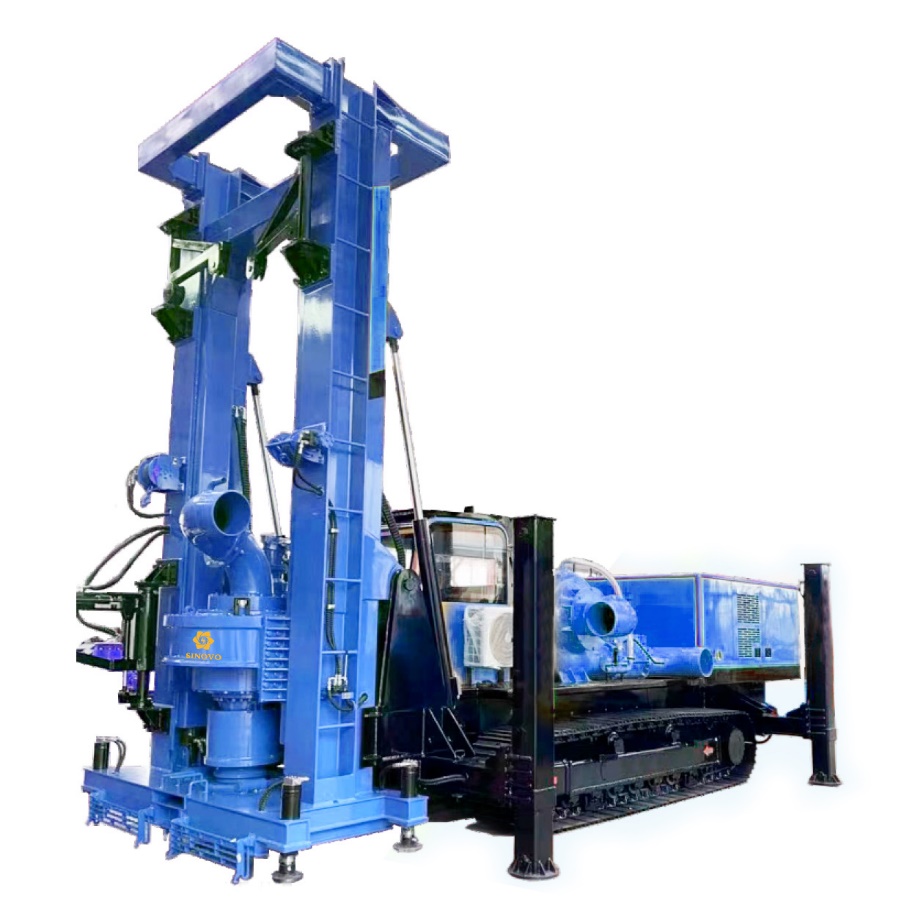
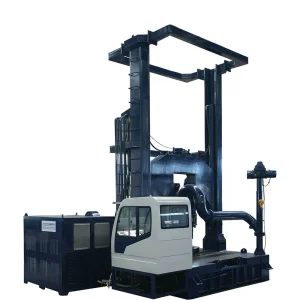
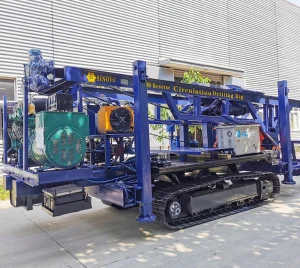
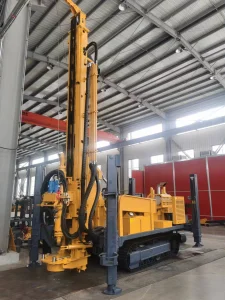
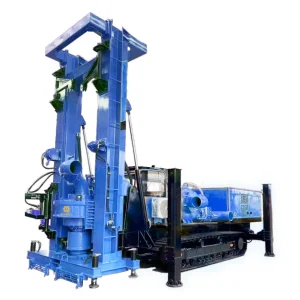
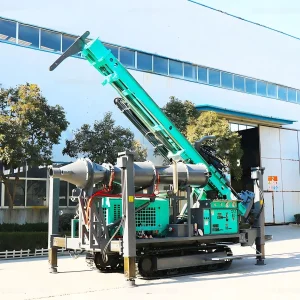
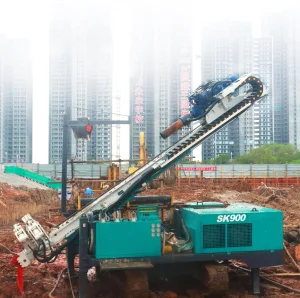
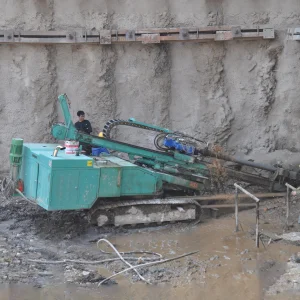
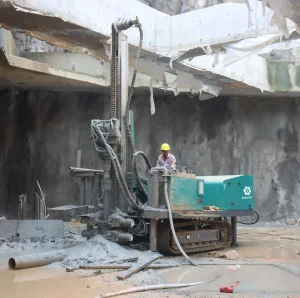
SD220L Crawler full hydraulic pump reverse circulation drilling rig is mainly used for drilling vertical pile foundations in large-diameter, pebble, hard rock and other complex strata. Its maximum diameter is 2.5m (rock), the drilling depth is 120 m, and the maximum strength of rock socketed can reach 120MPa, which is widely used in the drilling construction of pile foundations in ports, wharfs, bridges in rivers, lakes and seas with the advantages of fast footage and high automation, and saves labor and construction costs.
The SD220L Crawler full hydraulic pump reverse circulation drilling rig is mainly used for drilling vertical pile foundations in large-diameter, pebble, hard rock and other complex strata. With the advantages of fast footage and high automation, it is widely used in the drilling construction of pile foundations in ports, wharfs, bridges in rivers, lakes and seas, significantly saving labor and construction costs.
2.5mMax. Diameter (Rock)
120mDrilling Depth
120MPaMax. Rock Strength
Low Clearance Type
Main Structure and Performance Characteristics
Main Structure
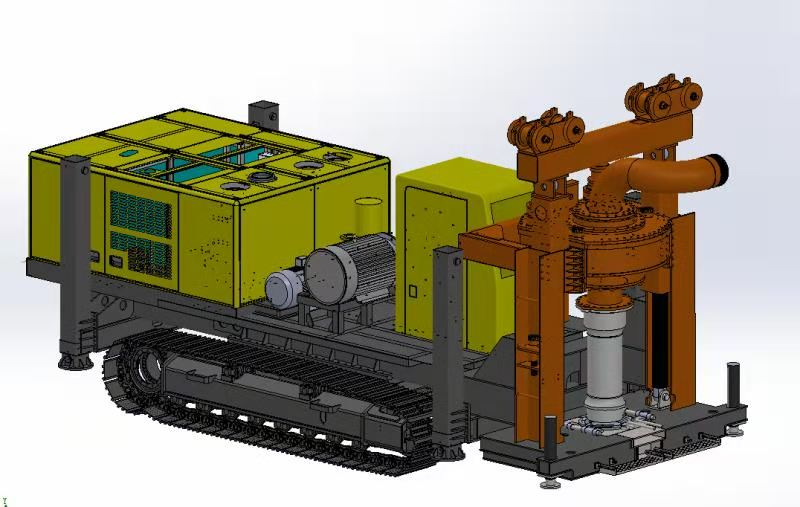
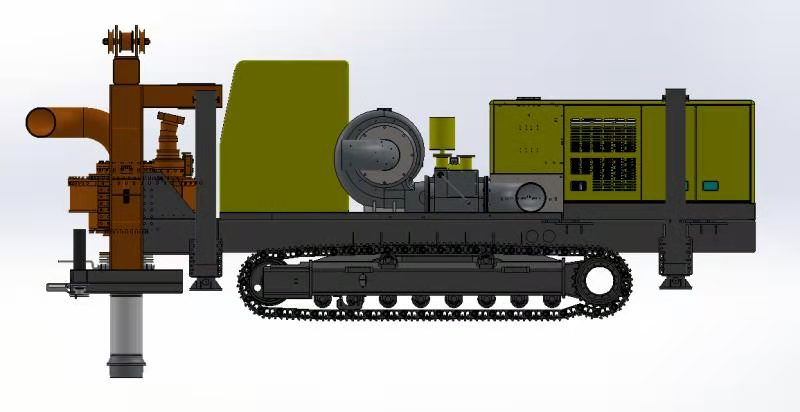
The equipment adopts a crawler chassis. The hydraulic system, composed of an engine and hydraulic pump installed at the rear of the vehicle, drives the motor reducer to realize self-propelled functionality.
Four hydraulic jacks are installed on the front and rear sides of the track chassis. The main machine can be supported and adjusted to front, rear, left, and right levels without leveling the construction site ground. The jacks can be opened and closed freely under separate control. During construction, the hydraulic jacks are extended, allowing the maximum width of the outrigger fulcrums to reach 3.8m.
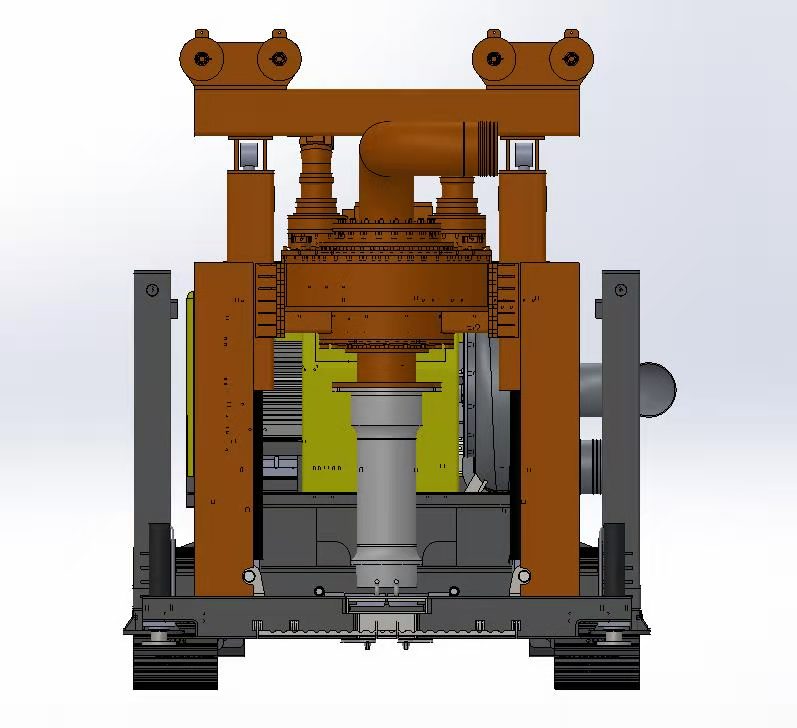
The gantry of the drilling rig is fixed at the front end of the chassis platform and placed vertically in its working state.
The gantry frame and the lower door-opening frame feature an integrated structure, which greatly enhances the stability of the overall frame structure.
A gantry subframe is installed inside the gantry, increasing guide performance, stabilizing construction, and greatly prolonging the service life of the drill pipe. The power head is installed inside the lower end of the gantry subframe. The hydraulic cylinder used for lifting the power head (including the subframe) is installed inside the square tube of the subframe's mullion.
The rotary head adopts a rotary drilling rig head to increase output torque, driven by three 107 variable motors.
The right mullion of the gantry is equipped with a manipulator and a cantilever crane (composed of a hydraulic winch, cantilever, pulley, etc.) used for disassembling and assembling drill pipes.
Close to the rear of the gantry, the middle and front part of the platform is equipped with an air-conditioned cab containing an operation console and display screen.
Behind the cab and in the middle of the platform, a slurry pump is installed. The slurry pump is directly driven by a 90kw motor, avoiding the energy loss of electric-to-hydraulic conversion while reducing construction costs.
In the hydraulic pump station at the rear of the platform, two independent hydraulic systems are installed:
10.1 Travel Hydraulic System: Composed of a Cummins 197kw diesel engine and negative flow constant power variable pump. It is used for the travel motor, main engine outrigger cylinder, door opening frame outrigger cylinder, lifting cylinder, and other actuating elements to facilitate site movement and pile hole alignment.
10.2 Rotary Head Hydraulic System: Composed of a 132kw three-phase asynchronous motor and negative flow constant power variable pump. It is used for rotary head operation, lifting oil cylinders, manipulator oil cylinders, hydraulic winches, and other actuating elements.
The advanced hydraulic system is specially designed for pump suction reverse circulation. Main components such as the main pump, rotary head motor, main valve, and load-sensitive auxiliary valve are sourced from well-known domestic and international brands (including Rexroth, Kawasaki, HC, Hengli, and Changjiang Hydraulic) to ensure stable performance.
Key electrical control components (display and controller) are high-end original imports from internationally famous brands. The control box adopts reliable aviation grounding and plug connections, creating a specialized electrical control system optimized for pump suction reverse circulation drilling.
The switchboard is installed behind the two hydraulic pump stations and is enclosed under protective covers.
Placing the mud pump on the platform reduces the distance between the mud pump and the water surface of the pile hole. This shortens the suction lift, greatly improving the mud pump's working performance.
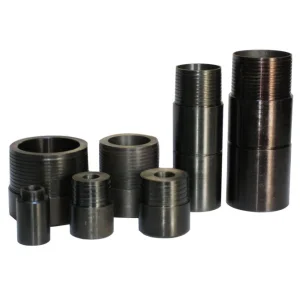
Drill Pipe Specification: ¢325x25x2000. Features threaded connections for convenient automatic assembly/disassembly. The buckle heads and nuts at both ends are taper rectangular buckles made of quenched and tempered 35CrMo, while the pipe body is made of 16Mn. Preheating before welding and heat preservation after welding processes are used to ensure welding quality and extend service life.
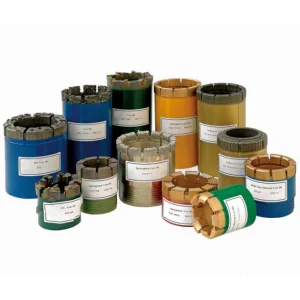
Drilling Accessories: Utilizes rotary drilling tools. Recommended accessories depend on geological conditions, including two-wing, three-wing, and four-wing rotary drilling tools, as well as cylindrical rotary tools. Teeth classifications include scraper-type alloy teeth, roller teeth, and cutter teeth.
Performance Characteristics
Advanced Slurry Pump: Designed by water conservancy experts. The double-channel impeller offers high working efficiency and energy-saving effects. Pump casing and impellers are made of wear-resistant high-chromium iron via investment casting. The impeller undergoes dynamic balance testing to support high balance and fast speeds. Solid particles, rock blocks, and pebbles smaller than the drill pipe's inner diameter can be discharged without repeated crushing, leading to high slag removal efficiency.
High Torque & Lifting Force: Specifically designed to handle complex geologies such as gravel, pebble, and hard rock.
Integrated Manipulator & Winch: Arranged on the gantry frame to make drill pipe removal and installation convenient, reliable, and labor-saving.
Smart Rotary Head: Delivers constant power output with automatic transmission. The variable motor automatically adjusts output torque and speed depending on geological conditions for fast, automated footage and high construction efficiency.
Real-time Monitoring: The cab display screen monitors and displays operational data for each system, keeping the operator fully informed of machine status.
Technical Specifications
Category
Parameter Details
Unit
Specification Value
Engine
Model
-
Cummins
Rated Power
kw
197
Rated Speed
r/min
2200
Max. Drilling Diameter
mm
2500 (Rock)
Max. Drilling Depth
m
120
Rotary Drive
Max. Output Torque
KN·m
220
Rotating Speed
r/min
4-17
Lifting Cylinder
Max. Pull-down Piston Pull
KN
450
Max. Pull-down Piston Push
KN
37
Max. Pull-down Piston Stroke
mm
800
Vacuum Pump
Supporting Power
KW
15
Ultimate Pressure
Pa
3300
Maximum Flow
L/S
138.3
Mud Pump
Supporting Power
KW
90
Flow
m³/h
1300
Head
m
1200
Main Pumping Station
Supporting Power
KW
132
Working Pressure of Hydraulic System
MPa
31.5
Small Auxiliary Crane
Max. Pulling Force
KN
10
Diameter of Wire Rope
mm
8
Max. Winch Speed
m/min
17
Chassis
Max. Traveling Speed
Km/h
1.6
Chassis Width
mm
3000
Track Width
mm
600
Track Ground Length
mm
3284
Drill Pipe Specification
mm
Φ325x22x1000
Main Engine Weight
Kg
31000
Dimensions
Working Condition (Length × Width × Height)
mm
7300×4200×4850
Transport Condition (Length × Width × Height)
mm
7300×3000×3550
Project Process Scheme
The pump suction reverse circulation drilling rig utilizes water circulation to continuously transport cutting materials from the pile hole to an adjacent mud pit. Sand, stone, and other granular materials settle to the bottom of the pit, while the clarified mud flows back into the pile hole to maintain the required water level. The specific process scheme operates as follows:
Step 3.1
Embed a pile casing at the pile hole. The casing must be made of steel plate thicker than 5mm, with a diameter 100mm larger than the design pile hole diameter. The length of the casing depends on geological conditions; its lower edge should be buried into the permanent soil layer, extending past the backfill layer.
Step 3.2
If backfill is too deep for normal excavation, users can attach a custom barrel drill bit to the rig to pre-drill holes. The depth for this procedure is generally kept under 10m to prevent wall collapse.
Step 3.3
Ensure the mud pit's excavation capacity exceeds the total volume of the pile hole. A rectangular shape is recommended to slow down the mud reflux speed, allowing maximum settlement of granular materials before the mud recirculates.
Frequently Asked Questions (FAQ)
QWhat is the maximum drilling diameter and depth of the SD220L drilling rig?
The SD220L drilling rig has a maximum drilling diameter of 2.5 meters in rock formations and can reach a maximum drilling depth of 120 meters.
QWhat geological conditions is this reverse circulation drilling rig suitable for?
It is highly suitable for drilling vertical pile foundations in complex, hard strata including large-diameter gravel, pebbles, and hard rock with socketed strengths up to 120MPa.
QHow does the reverse circulation system handle solid rock and pebbles?
The rig features a high-efficiency slurry pump with a double-channel impeller. It can discharge solid particles, pebbles, and rock blocks as long as they are smaller than the inner diameter of the drill pipe, avoiding repeated crushing and improving efficiency.
QWhat are the specifications and connection type of the drill pipe?
The drill pipe uses a ¢325x25x2000 specification with threaded connections. The buckle heads and nuts at both ends use taper rectangular buckles made of 35CrMo, while the main body is made of 16Mn steel.
QHow does the leveling system work on uneven construction sites?
The crawler chassis is equipped with four independent hydraulic outrigger jacks. These allow the operator to adjust the front, rear, left, and right levels of the main machine without manually leveling the ground beforehand.
QWhat makes the hydraulic and power systems energy efficient?
The slurry pump is directly driven by a 90kw motor, avoiding energy loss from electric-hydraulic conversion. Additionally, the travel and rotary systems utilize negative flow constant power variable pumps to optimize power allocation.
 SINOVO