 SINOVO
1 / 2
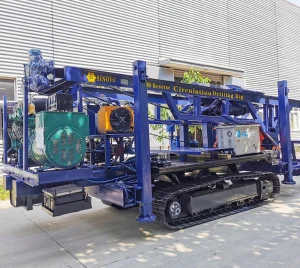
Due to the use of a closed circulation system, the air reverse circulation drilling rig can better control the flow of underground gas, allowing for more efficient drilling to the required depth during the drilling process.
The air reverse circulation drilling rig uses compressed air as the circulating medium, unlike mud drilling rigs that require a large amount of water and chemicals, avoiding environmental pollution. It is also suitable for drilling in water scarce areas and consumes relatively less energy, making it more energy-efficient.
The rock debris dust samples obtained through air reverse circulation drilling are not contaminated, the samples are easy to classify and track, have precise location and depth, and can accurately locate mineralization locations.
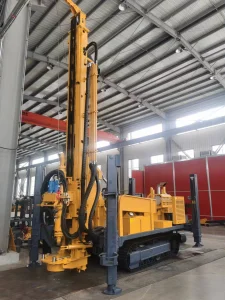
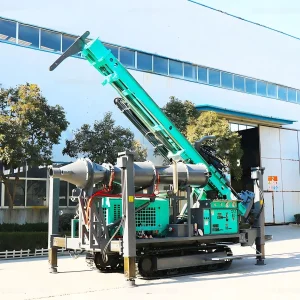
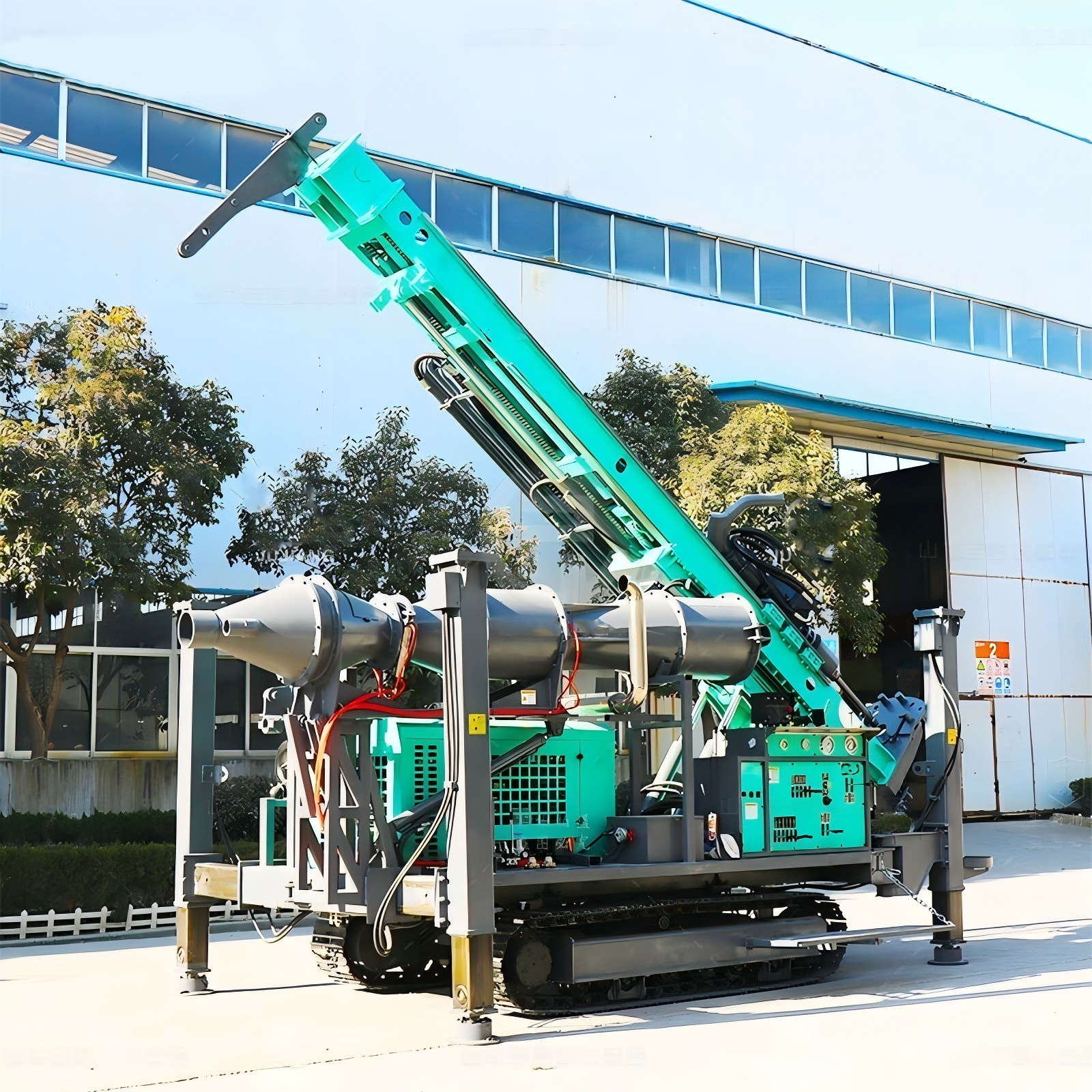
The lifting of the drilling rig frame, unloading of drill rods, rotation and feeding, support legs, hoisting, walking and other actions are all implemented by the hydraulic system, greatly reducing labor intensity, improving construction efficiency and engineering quality.
The structure of the air reverse circulation drilling rig is relatively simple, and the maintenance cost is low. For some drilling projects that require a large amount of work, the use cost of the air reverse circulation drilling rig is lower.
This technology is suitable for various geological conditions and is suitable for complex environments such as thin air, thick permafrost, and abundant groundwater in high-altitude areas. In addition, air reverse circulation drilling technology has been widely used in fields such as mining exploration, oil and gas extraction, and coal mining.
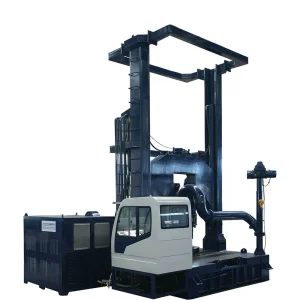
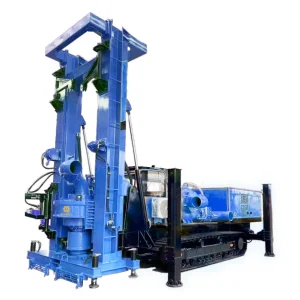
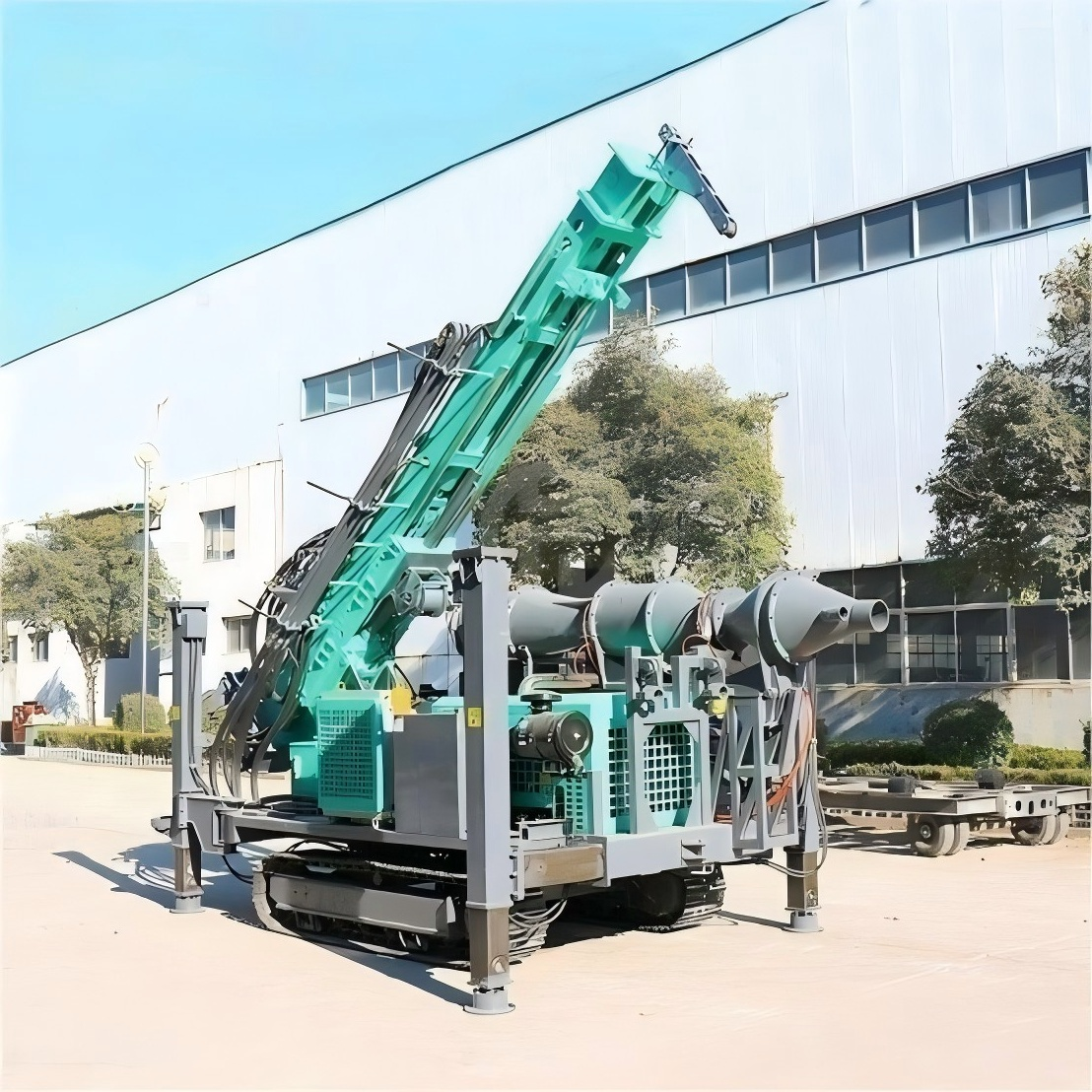
| ARC-500 Reverse circulation drilling rig | ||
|---|---|---|
| Parameter Class | Model | ARC-500 |
| Tractor Parameter | Weight | 9500KG |
| Transport dimension | 6750×2200×2650mm | |
| Chassis | Engineering steel tracked hydraulic walking chassis | |
| Track length | 2500mm | |
| Track width | 1800mm | |
| Hydraulic high leg | 4 | |
| Engine power | Cummins Country Two six cylinder diesel | |
| Power | 132 KW | |
| Technical Specification | Applicable rock strength | F=6~20 |
| Drill rod diameter | φ102/φ114 | |
| Drilling diameter | 130-350mm | |
| Drill rod length | 1.5/2/3m | |
| Drilling depth | 500m | |
| Single advance length | 4m | |
| Footage efficiency | 15-35m/h | |
| Rotary torque | 8500-12000 N.m | |
| Rig lift | 22 T | |
| Hoist lifting force | 2 T | |
| Angle of climb | 30° | |
| Traveling speed | 2.5 km/h | |
The ARC-500 reverse circulation drilling rig is designed to reach a maximum drilling depth of 500 meters under suitable geological conditions.
By utilizing air reverse circulation technology, the rock debris and dust samples are carried upward through the center of the drill rod. This prevents contamination from the borehole wall, ensuring the samples are easy to classify, track, and locate precisely.
The rig is powered by a high-performance Cummins Country Two six-cylinder diesel engine with a power output of 132 KW, providing ample power for demanding operations.
Yes. Because it utilizes compressed air as the circulating medium instead of mud, it eliminates the need for large quantities of water and chemical additives, effectively preventing soil and groundwater pollution.
Fully hydraulic operation controls key actions including rig frame lifting, rod unloading, rotation, feeding, and walking. This reduces manual labor, ensures smoother operation, and improves construction safety and speed.
Absolutely. The technology is highly adaptable to complex environments, including high-altitude areas with thin air, thick permafrost layers, and regions with abundant groundwater resources.