What types of connections are available for these drilling buckets?
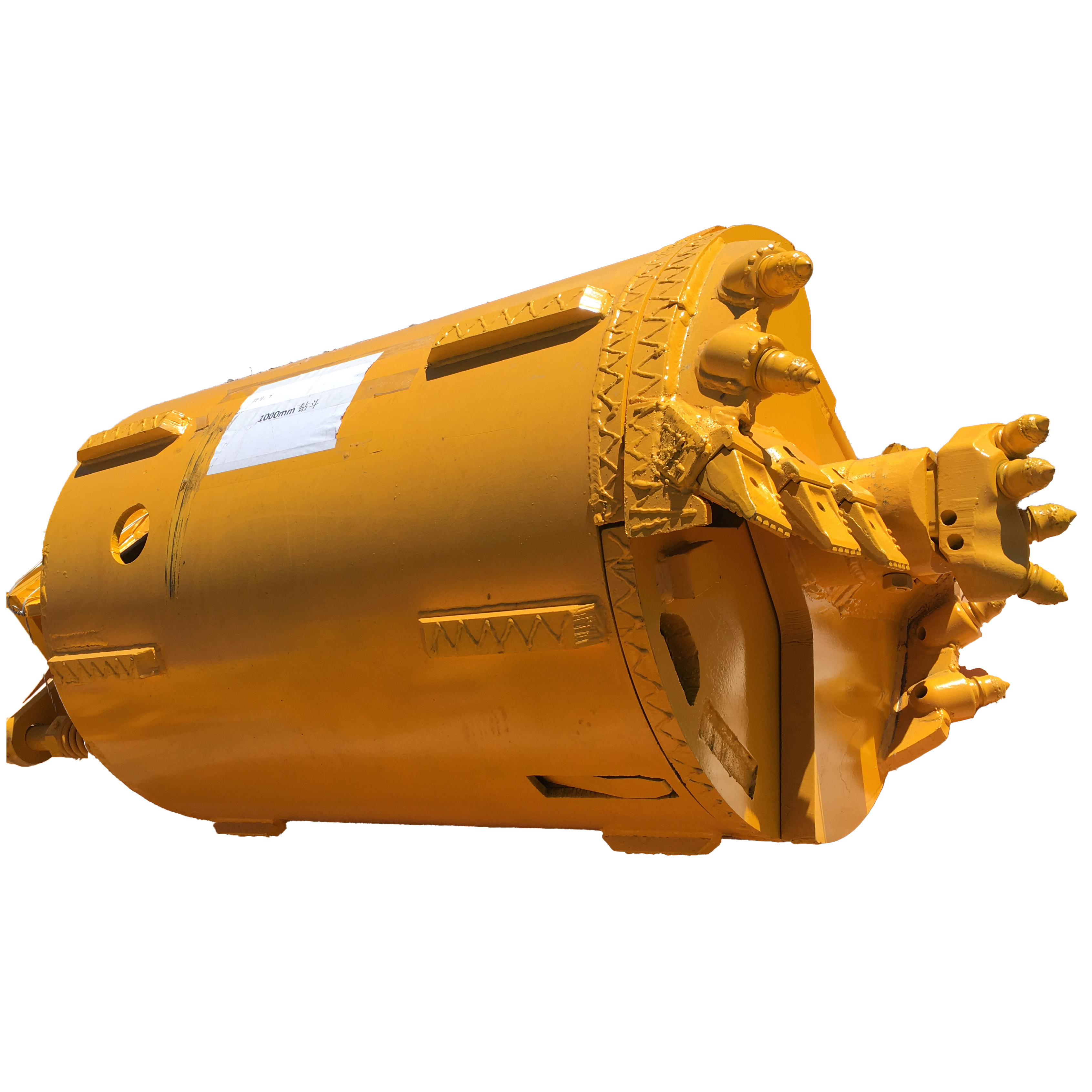
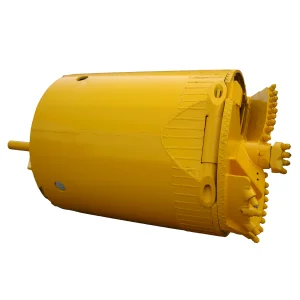
All standard configurations in these specifications use Bauer connections to ensure highly compatible, secure, and reliable mounting with standard rotary drilling rigs.
How does bucket height change across different diameters?
Generally, sizes from φ600mm to φ1500mm feature a standard bucket height of 1200mm. For larger sizes like φ1800mm, the height is typically 1000mm, while φ2000mm to φ2500mm models feature an 800mm bucket height to balance capacity and structural performance.
What is the thickness variation for the cutting plates and base plates?
For heavy-duty options, base plate thicknesses range between 30mm, 40mm, and 50mm, with cutting plates typically maintaining a thickness of 50mm. The largest φ2500 specifications feature an integrated 40mm box-type structure.
What is the teeth quantity range on these drill specifications?
The teeth quantity scales relative to the tool diameter. In these sets, teeth range from 2 teeth on smaller φ600mm buckets up to 25 teeth on larger φ2500mm rock/soil excavation buckets.
How does weight scale across these drilling tools?
Weights vary significantly by configuration, starting at 580kg for a lighter φ600mm configuration, and scaling up to 6112kg for the heavy-duty φ2500mm configuration to provide maximum penetrative downforce.
What are the dimensions for the BS series drills?
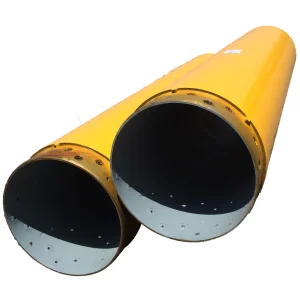
The BS series features straight tube diameters ranging from 520mm (BS600) up to 1360mm (BS1500), matching drill gear diameters from 600mm to 15000mm (BS1500 design value) to ensure clean excavation.
 SINOVO