What Is Drill Rod Steel Used For?

Time:2026-11-06 Author:Amelia
0%

Drill Rod Steel is the working link between a drilling rig and the bit cutting into rock. In quarrying, mining, water-well drilling, and geotechnical work, rods transfer rotation, feed force, or impact while carrying the bit deeper. Their steel must withstand repeated loading, abrasion, and bending. A rod that looks like a simple metal tube is doing a demanding job. The rod matters.

Industry context helps explain why reliable drilling components deserve attention. The U.S. Geological Survey’s Mineral Commodity Summaries 2024 estimated the value of U.S. nonfuel mineral production at about $105 billion in 2023. That figure does not measure drill-rod consumption, but it shows the scale of activity that depends on equipment reaching and breaking rock. Not just a connector.

This article explains what Drill Rod Steel is used for, how it works in different drilling methods, and which properties matter in service. Readers will encounter terms such as tensile strength, wear resistance, heat treatment, and thread compatibility. These details affect service life, but no single grade suits every rig, formation, or operating condition. A harder rod may resist wear, yet still fail if its threads, toughness, or dimensions do not match the system. That distinction is easy to overlook. Choose by application and manufacturer specifications, not by a strength number alone.
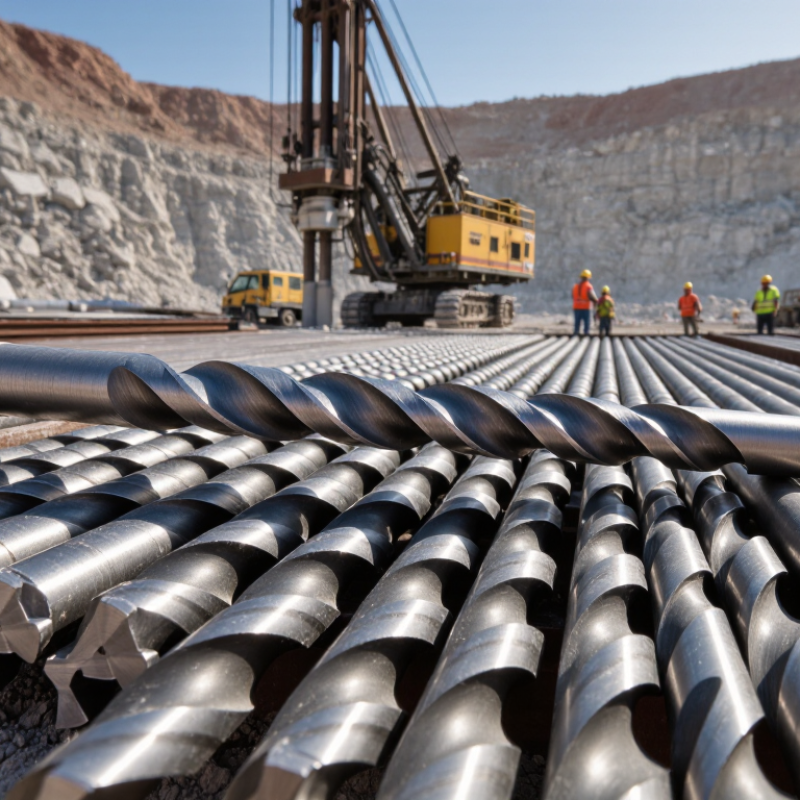
What Is Drill Rod Steel Used For?

What Drill Rod Steel Is and How It Is Made

Drill rod steel is a tool steel supplied as round bar, often ground to a controlled diameter and smooth finish. It is used to make punches, pins, shafts, and other tools that need strength and wear resistance. Its exact composition varies: carbon and alloying elements influence hardness, toughness, and how well the steel responds to heat treatment. Not every grade suits every job.

Production begins with molten steel, which is cast into billets, then hot-rolled or forged into bars. The bars are commonly annealed to make machining easier; manufacturers may then straighten, peel, or grind them to meet size and surface requirements. Heat treatment hardens the finished part, while tempering helps reduce brittleness. It sounds simple. It isn’t.

Poor temperature control can leave uneven hardness, so the steel grade and treatment must match the tool’s working conditions.

The World Steel Association reported 1,882.6 million tonnes of crude steel production worldwide in 2024. That figure covers all crude steel, not drill rod specifically, but it shows the scale of the steelmaking industry behind specialty tool steels.

Small details matter. A clean surface and consistent diameter can save time during machining, though they cannot compensate for choosing the wrong grade.

Key Properties That Support Drilling Work

What Is Drill Rod Steel Used For?

Key Properties That Support Drilling Work

Drill rod steel transfers rotation and impact from a rig to the cutting tool. It must resist bending, torsion, and repeated shock as the bit meets hard or uneven ground. A rod that is too brittle may crack; one that is too soft can wear quickly or lose alignment. Toughness and fatigue resistance matter. So does straightness. Even a slight bend can cause vibration, uneven hole geometry, and extra stress at threaded joints.

Material choice depends on drilling method, depth, ground conditions, and connection design. Heat treatment can balance strength and toughness, while careful control of the steel’s chemistry helps maintain consistent performance. The World Steel Association’s World Steel in Figures 2024 reports global crude steel production of 1,892.2 million tonnes in 2023. That scale reflects steel’s wide industrial role, but it does not mean every steel grade suits drill rods. Check the rod maker’s grade and mechanical-property data against the job specification; general strength values alone can be misleading.

Tips: Inspect threads, shoulders, and rod surfaces for cracks, wear, or bending before use. Keep connections clean and use the specified torque. Small defects matter. Record failures and operating conditions, too; field notes can reveal that a grade, joint, or drilling setup needs a second look.

Where Drill Rod Steel Is Commonly Used

Drill rod steel is commonly used in machine shops where accurate, tough parts are needed in small or medium production runs. Its round, ground surface makes it convenient for turning into punches, pins, arbors, and short shafts. Tool-and-die shops also use it for gauges, forming tools, and components that must resist repeated contact. In a busy workshop, a rod can be cut to length, machined, and heat-treated for a specific task. That flexibility is useful.

Maintenance teams often keep drill rod on hand to replace worn pins or make simple fixtures without ordering a custom part. It also appears in manufacturing equipment, where alignment pins and wear parts face constant friction. Some grades suit applications needing greater hardness, while others are easier to machine before heat treatment. Choosing the wrong grade can cause excess wear or cracking. That is easy to overlook. The final performance depends on the steel grade, heat treatment, dimensions, and working conditions—not just the label “drill rod.” It is not a universal fix, and a part exposed to impact or high temperatures deserves careful material selection.

Common uses: Drill rod steel is used to make punches, dies, gauges, cutting tools, and impact-resistant tooling. The chart shows indicative hardened hardness ranges for selected grades; actual results vary with heat treatment and product specifications.

How Drill Rod Steel Performs in Different Drilling Methods

Drill rod steel must match the forces and conditions of the drilling method. In rotary drilling, rods carry torque from the drive to the bit while resisting bending in the bore. Straightness matters: even slight runout can cause vibration, uneven wear, or a wandering hole. Hollow rods may also carry water or drilling fluid to clear cuttings, depending on the setup.

Percussive methods place different demands on the steel. In top-hammer drilling, repeated impacts travel through the rod string, so toughness and sound connections help limit fatigue and thread damage. With down-the-hole drilling, the hammer works near the bit; rods mainly transmit rotation and often convey compressed air. They still face vibration, abrasion, and stress at each joint. Small details matter.

Auger and shallow drilling applications may involve lower impact loads, but rods still encounter twisting forces and abrasive soil. A harder steel grade is not automatically better: excessive hardness can reduce toughness, while an overly soft rod may wear quickly. Selection depends on rod diameter, joint design, drilling depth, and maintenance. Real ground conditions can be less predictable than a specification sheet suggests. Inspecting threads and watching for bends or cracks helps catch problems early, though inspection does not replace choosing the right rod for the method.

What Is Drill Rod Steel Used For? - How Drill Rod Steel Performs in Different Drilling Methods
Drilling Method How the Rod Is Used Performance Demands on the Steel Typical Applications Key Considerations
Rotary drilling Drill rods connect the surface drive to the bit, transmit rotation and, in many systems, carry drilling fluid to the bit. Needs sufficient torsional strength and fatigue resistance to handle repeated rotation and changing loads. The rod and connections must also withstand the drilling environment. Water wells, geotechnical investigations, and some mineral exploration or construction drilling. Connection wear, bending, and corrosion can shorten service life. Rod dimensions and connections must match the rig and drilling system.
Down-the-hole (DTH) hammer drilling The rod string rotates the hammer and bit and commonly conveys compressed air downhole to power the hammer and clear cuttings. Requires strength and fatigue resistance under rotation, vibration, and repeated impact-related loading, as well as durable threaded connections. Quarrying, mining, construction, and drilling in hard rock. Air passages and joints must remain clear and secure. Correct handling and inspection help limit thread damage and fatigue cracking.
Top-hammer percussion drilling Rods transfer impact energy from a surface hammer to the bit while also transmitting rotation and, where used, flushing air or water. Must withstand cyclic stress and repeated impact transmission. Toughness, fatigue resistance, and reliable connections are important. Underground mine development, bench drilling, and other hard-rock applications. Rod length, alignment, and joint condition affect energy transfer. Worn or damaged threads can lead to connection failure.
Wireline core drilling Hollow rods rotate the core barrel and often provide a path for drilling fluid. The inner core tube can be retrieved through the rod string without removing the rods. Needs torsional strength, fatigue resistance, and dimensional consistency. The hollow section and threaded joints must maintain an effective fluid path. Mineral exploration and geological investigations where recovered core samples are required. Careful alignment and connection make-up help protect the core and reduce fluid leakage. Rod size is selected to suit the core-drilling system and target depth.
Auger drilling Solid or hollow-stem auger sections transmit torque to the cutting head; the rotating flights bring soil cuttings toward the surface. Requires torsional strength and resistance to bending and wear, particularly when drilling dense soils or encountering obstructions. Shallow geotechnical sampling, soil investigation, and some foundation work. Auger sections and joints must suit the soil and rig torque. This method is generally less suited to hard, intact rock than percussion or rock-rotary methods.
General material and maintenance Drill rods are commonly made from steel selected and processed for the loads and conditions of the drilling system. Depending on the application, relevant properties can include strength, toughness, fatigue resistance, wear resistance, and the ability to maintain sound threaded connections. Applies across drilling methods, with material and heat treatment chosen for the specific rod design and service conditions. There is no single steel grade suited to every method. Follow the equipment specifications, inspect rods and threads regularly, and replace damaged components.

Choosing the Right Drill Rod Steel for a Job

Choosing drill rod steel starts with the job, not the hardest grade on the shelf. Drill rod is commonly used for precision-made punches, pins, shafts, arbors, and wear-resistant components. Some grades machine easily before heat treatment; others are selected for greater hardness or toughness. Match the steel to the part’s load, contact, and working conditions. Fit matters.

Check the required diameter, straightness, and finish before ordering. A close-fitting guide pin may need a smooth, consistent surface, while a shop-made tool may allow more machining. Consider how the part will be heat-treated, too. Hardening can improve wear resistance, but it may also cause distortion or make later machining difficult. If dimensions are critical, leave machining allowance and confirm the supplier’s tolerances.

Think about failure, not just performance. A brittle rod can crack under impact, while a softer one may wear quickly against abrasive material. No grade solves everything. For a one-off part, machinability and available stock may matter more than maximum hardness; for repeated production, consistency can be worth extra planning. Check the material specification and test a sample when the service conditions are uncertain. That small step can prevent a poor fit or early wear.

FAQS

What is drill rod steel used for?

It transfers rotation and impact from a drilling rig to the cutting tool. It is also machined into pins, punches, arbors, and short shafts.

Which properties matter most in a drill rod?

Toughness, fatigue resistance, strength, and straightness matter. The rod must resist bending, twisting, and repeated shock. Even a slight bend can cause vibration.

How should I choose a drill rod grade?

Match the grade and mechanical-property data to the drilling method, depth, ground conditions, and connection design. General strength values alone can mislead. Check the job specification.

Does a harder steel always perform better?

No. Excessive hardness can reduce toughness, while softer steel may wear quickly. A better choice depends on the forces and conditions. It is not always obvious.

How do drilling methods affect rod requirements?

Rotary drilling requires rods to transmit torque and resist bending. Percussive drilling adds repeated impacts and fatigue stress. Auger work may involve less impact, but twisting and abrasive soil remain concerns.

What should I inspect before using a drill rod?

Check threads, shoulders, and surfaces for cracks, wear, or bends. Keep connections clean and use the specified torque. Small defects matter.

Can drill rod steel be used for workshop parts?

Yes. Its round, ground surface is convenient for machining pins, gauges, forming tools, and short shafts. Heat treatment can suit a specific task.

What information helps diagnose rod failures?

Record the failure and operating conditions, including the drilling setup. Field notes may show that the grade, joint, or maintenance routine needs another look. It can be overlooked.

Conclusion

Drill Rod Steel is a specially processed steel material made into solid, round bars for tools and components used in drilling. Its composition and heat treatment help give it a useful balance of hardness, strength, wear resistance, and machinability. These qualities allow it to withstand repeated contact, pressure, and friction while supporting accurate work.

Drill Rod Steel is commonly used to make drill bits, punches, shafts, and other parts for metalworking, manufacturing, maintenance, and general drilling tasks. Its performance can vary with the drilling method, material being worked, and operating conditions: some jobs place greater demands on hardness, while others require toughness or ease of machining. Choosing the right grade and size means matching the rod’s properties to the tool design and workload, helping improve durability and produce consistent results.


Amelia

Amelia

Amelia is a seasoned marketing professional with a wealth of expertise in our company’s core offerings. With an unwavering passion for driving growth and innovation, she plays a pivotal role in shaping our marketing strategies and enhancing brand visibility. A key aspect of her responsibilities......