Choosing the best Water Drillers worldwide requires more than comparing prices, rig photographs, or promised completion dates. A reliable contractor must understand geology, water quality, local regulations, drilling depth, and long-term maintenance. The wrong choice may leave a dry borehole, unstable casing, or contaminated supply beneath an attractive invoice.
The scale of the challenge is substantial. The WHO and UNICEF Joint Monitoring Programme reported in 2023 that 2.2 billion people still lacked safely managed drinking water. UNESCO’s 2022 World Water Development Report also identified groundwater as a vital source for drinking, farming, and industry. These figures make contractor selection a practical water-security decision, not merely a procurement task. As groundwater specialist Dr. Karen G. Villholth has emphasized, “Groundwater is the hidden resource that sustains life and livelihoods.” Her point is easy to overlook at a drilling site, where the resource remains invisible.
This guide examines how to assess Water Drillers through technical credentials, hydrogeological experience, equipment quality, transparent estimates, safety records, and post-drilling testing. Look for details: a documented borehole log, clean steel or PVC casing, measured yield, and laboratory water results. Ask who will supervise the work. Ask what happens if the borehole fails.
There is no perfect checklist. A respected company in one region may lack experience in another aquifer. Even professional reports can contain uncertainty. That is why careful comparison, local references, and independent technical advice remain essential before signing a contract.
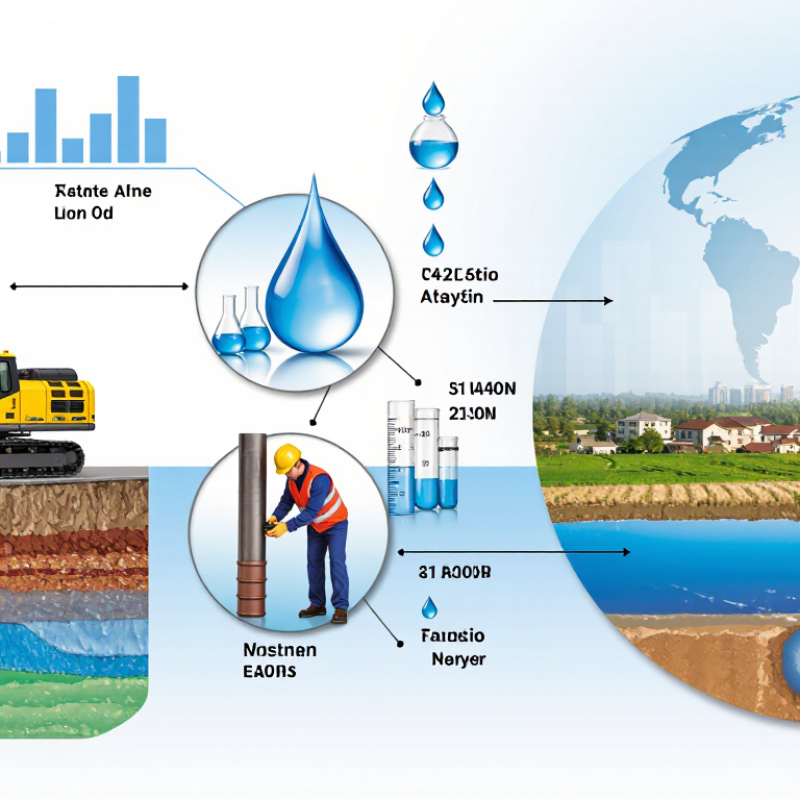
Water drilling begins with the site, not the drilling rig. Define the expected water use first: household supply, irrigation, livestock, or industrial production. A small rural well may need modest flow, while a farm can require steady output during dry months. Record daily demand and seasonal changes. Guessing here can create expensive problems.
Ground conditions decide the drilling approach. Review geological maps, nearby well records, land elevation, and local rainfall patterns. A qualified hydrogeological survey can identify likely aquifers and possible contamination risks. On site, inspect access roads, overhead cables, drainage, and space for equipment. Clay may slow drilling. Loose gravel can cause wall collapse. Hard rock may require different tooling and stronger casing.
Ask potential drillers for evidence of relevant experience, current qualifications, insurance, and clear safety procedures. Request sample drilling logs showing depth, formations, casing sizes, water strikes, and test results. Reliable contractors explain uncertainty instead of promising water at an exact depth. That matters. A preliminary survey can still be wrong, especially where groundwater data is limited. Confirm permits, environmental requirements, well spacing rules, and water testing obligations before work begins. The cheapest quote may omit grouting, development, or proper sealing. Those omissions can affect water quality long after the rig leaves.
How to Choose the Best Water Drillers Worldwide?
Choosing a water driller requires more than comparing prices. The drilling method must match local geology, target depth, and water quality risks. Rotary drilling works efficiently in many soft formations, while percussion drilling can perform better in hard, fractured rock. Air rotary methods provide fast progress and clear cuttings, but they may struggle in unstable ground. Mud rotary drilling supports fragile formations, although drilling fluids require careful control and disposal.
Equipment reveals practical capability. Inspect the rig’s lifting capacity, torque, compressor output, and pump condition. Ask whether the crew carries suitable casing, screens, gravel pack, and sampling tools. A reliable contractor records drilling speed, water strikes, formation changes, and borehole measurements. These details matter when the final well must produce steady water for years.
Technical expertise is harder to measure. Request previous projects with similar geology, not only impressive photographs. Qualified teams should explain well design, screen placement, grouting, development, and yield testing in clear language. They should also follow local permits, groundwater protection rules, and recognized safety procedures. I have seen low-cost projects fail after poor casing installation; the saving disappeared during repairs. No method is perfect. Even experienced drillers can misread fractured rock. Choose a team that admits uncertainty, tests assumptions, and adjusts its plan when field evidence changes.
Choosing a water driller requires more than comparing prices. Check the contractor’s license through the relevant government registry. Confirm its scope, expiry date, and responsible professional. Request recent project references, insurance details, and evidence of trained operators. A certificate can be current, yet workmanship can still fail. I would inspect the actual records, not rely on a polished website. The WHO and UNICEF Joint Monitoring Programme reported that 2.2 billion people lacked safely managed drinking water in 2022. Poorly constructed wells can worsen that risk through contamination.
Safety evidence should be specific. Ask for written risk assessments, equipment inspection logs, worker training records, and emergency procedures. Compare practices with applicable national rules and recognized systems such as ISO 45001. The International Labour Organization estimates that 2.93 million workers die annually from work-related factors, including accidents and diseases. Drilling sites deserve serious controls. Hard hats are not enough. Environmental checks matter equally. UN-Water’s 2022 groundwater report states that groundwater supplies nearly half of global drinking water and about 40% of irrigation water. Require a hydrogeological assessment, proper casing, sanitary sealing, controlled drilling fluids, and safe cuttings disposal. Ask how the contractor prevents aquifer mixing and restores abandoned boreholes. Request water-quality testing before and after drilling. Some decisions remain uncertain, especially where local groundwater data are limited. That uncertainty should be documented, not hidden.
Use this evidence-based comparison framework to evaluate water-drilling contractors. Licensing, worker protection, groundwater permits, and environmental obligations vary by jurisdiction; the requirements below identify commonly applicable legal and technical checks rather than ranking individual companies.
| Jurisdiction or Operating Context | License and Permit Check | Technical Competence Evidence | Worker Safety Requirements | Environmental Practice to Verify | Independent Reference Framework | Procurement Risk Level |
|---|---|---|---|---|---|---|
| European Union and European Economic Area | Confirm the contractor is registered for the relevant construction or groundwater activity and that the project has any required abstraction, drilling, land-use, or environmental authorization. | Request borehole logs, drilling-method records, casing specifications, grouting details, development records, and a completion report signed by a competent professional. | Require a documented risk assessment, equipment inspections, emergency procedures, personal protective equipment, and training records for drilling and lifting operations. | Check prevention of aquifer cross-contamination, proper sealing of abandoned boreholes, controlled disposal of drilling fluids, and protection of groundwater bodies. | Water Framework Directive; Groundwater Directive; ISO 45001; ISO 14001; ISO 22475-1. | Lower when verified |
| United States | Verify the applicable state or local well-contractor license, well-construction permit, water-right or withdrawal authorization, and any environmental or land-access approval. | Check experience with the required aquifer, drilling method, casing, screen, sanitary seal, well development, testing, and state well-completion reporting. | Confirm a written job-hazard analysis, machine guarding, fall protection, hazardous-chemical communication, respiratory protection where needed, and competent supervision. | Verify management of cuttings and drilling fluids, prevention of surface contaminants entering the well, disinfection procedures, and lawful plugging of unsuccessful wells. | State well-construction rules; Occupational Safety and Health construction and general-industry requirements; ASTM well and groundwater testing practices. | Jurisdiction-dependent |
| Canada | Confirm the contractor meets the applicable provincial or territorial licensing rules and that the owner has the required well record, groundwater authorization, and environmental approvals. | Request documented experience with local geology, drilling logs, lithologic descriptions, well-development records, pumping tests, and water-quality sampling procedures. | Verify compliance with the applicable provincial or territorial occupational-health-and-safety legislation, equipment maintenance, site orientation, and emergency planning. | Check sanitary seals, separation from contamination sources, management of drilling waste, winterization controls, and proper decommissioning of unused wells. | Provincial or territorial well-construction standards; ISO 45001; ISO 14001; CSA groundwater-related guidance where applicable. | Jurisdiction-dependent |
| Australia | Verify the relevant state or territory water-bore license, driller registration, construction approval, groundwater take authorization, and land-access permissions. | Confirm competency for the local formations and required method, supported by drilling logs, casing and screen schedules, grouting records, yield tests, and bore-completion documentation. | Require a site-specific safety plan covering remote work, vehicle access, high-pressure systems, lifting, fatigue, heat, and emergency communication. | Check aquifer protection, bore isolation, prevention of inter-aquifer leakage, management of saline or contaminated water, and compliant bore abandonment. | State or territory bore-construction standards; model Work Health and Safety Regulations; ISO 45001; ISO 14001. | Jurisdiction-dependent |
| New Zealand | Confirm local or regional consent requirements for drilling, groundwater take, discharge, land disturbance, and the installation or alteration of a bore. | Review evidence of competent drilling personnel, accurate geological logs, well-design calculations, screen selection, sanitary sealing, development, and performance testing. | Verify risk assessments for machinery, drilling fluids, confined spaces, traffic, noise, vibration, and remote or difficult terrain. | Check protection of groundwater quality, management of cuttings and fluids, prevention of cross-connection between aquifers, and documented decommissioning. | Resource-management consent conditions; Health and Safety at Work requirements; ISO 45001; ISO 14001. | Consent-sensitive |
| South Africa | Verify applicable water-use authorization, lawful borehole-drilling registration or competency requirements, environmental authorization where triggered, and landowner permission. | Request proof of experience in the relevant geological setting, borehole logs, casing and gravel-pack details, yield testing, water-quality sampling, and completion records. | Confirm a documented occupational-health-and-safety plan, equipment inspections, hazardous-substance controls, dust management, and emergency arrangements. | Check prevention of groundwater contamination, control of drilling fluids, protection of wetlands and sensitive areas, and proper sealing of failed or abandoned boreholes. | National Water Act; applicable environmental-management requirements; ISO 45001; ISO 14001; SANS groundwater and borehole practices where applicable. | Permit-sensitive |
| India | Confirm state and local permissions, groundwater-extraction authorization where applicable, borewell-construction rules, land access, and any restrictions in regulated or stressed groundwater areas. | Require a site investigation, hydrogeological justification, drilling logs, casing and sealing design, yield testing, water-quality testing, and a formal completion report. | Verify machinery safeguards, worker training, electrical safety, traffic and public protection, child-safety controls near open boreholes, and emergency procedures. | Check prevention of aquifer contamination, safe handling of drilling waste, protection of nearby wells, control of saline or polluted zones, and secure closure of failed boreholes. | Applicable central, state, and local groundwater rules; Bureau of Indian Standards for drinking-water quality; ISO 45001; ISO 14001. | Permission-sensitive |
| Middle East and North Africa | Verify the local drilling permit, groundwater-abstraction approval, land-use consent, environmental clearance, and any restrictions relating to scarce or strategic aquifers. | Prioritize contractors able to demonstrate hydrogeological assessment, saline-water risk evaluation, borehole design, yield testing, water-quality testing, and accurate well records. | Require heat-stress controls, dust and silica protection, lifting plans, equipment inspections, electrical safety, drinking-water provision, and emergency transport procedures. | Check prevention of saline intrusion, aquifer over-abstraction, uncontrolled discharge, contamination from fuels and chemicals, and abandonment sealing. | National water and environmental legislation; ISO 45001; ISO 14001; ISO 22475-1; local groundwater-protection codes. | Water-scarcity risk |
| Sub-Saharan Africa | Confirm national, regional, or municipal drilling authorization, water-use approval, environmental screening, landowner consent, and any community or customary-land requirements. | Request evidence of local hydrogeological experience, siting methodology, drilling logs, sanitary completion, pumping tests, water-quality results, and maintenance instructions. | Verify machine guarding, transport safety, manual-handling controls, personal protective equipment, first aid, worker training, and protection of nearby residents. | Check borehole sanitation, protection from latrines and surface flooding, responsible waste disposal, prevention of aquifer cross-contamination, and safe closure. | National water and environmental laws; ISO 45001; ISO 14001; WHO Guidelines for Drinking-water Quality; ISO 22475-1. | Verification essential |
| Projects Without a Clearly Defined Local Regulator | Do not proceed on verbal assurances alone. Obtain written confirmation from the competent authority regarding permits, abstraction rights, land access, and environmental obligations. | Require a method statement, hydrogeological assessment, borehole design, measurable acceptance criteria, testing plan, as-built records, and an independent technical review. | Require a project-specific safety plan, qualified supervision, emergency contacts, equipment inspection records, incident reporting, and worker competency documentation. | Include spill prevention, drilling-fluid containment, waste tracking, groundwater sampling, site restoration, and a priced abandonment or remediation plan. | ISO 22475-1; ISO 45001; ISO 14001; WHO Guidelines for Drinking-water Quality; written requirements from the competent local authority. | Highest risk |
Choosing the Best Water Drillers Worldwide
Evaluating Project Costs, Timelines, Warranties, and Service Support
A professional driller should provide a detailed cost breakdown before mobilization. Ask about drilling depth, ground conditions, casing, permits, transport, and water testing. A low quote may hide expensive changes later. I have seen estimates fail when hard rock appeared below the planned depth. That risk needs a written allowance.
Timelines should include equipment delivery, site preparation, drilling, casing, development, and final testing. Request milestone dates, not one vague completion promise. Warranty terms deserve equal attention. Check whether they cover pumps, casing defects, workmanship, and replacement labor. Some warranties sound strong but exclude difficult ground conditions. Read every exclusion carefully. Service support matters after installation. Confirm response times, spare-part access, technician availability, and emergency procedures. Local support can reduce costly downtime, even when the contractor works internationally.
Tips: Compare at least three itemized proposals. Ask for recent project references with similar geology. Verify licenses, insurance, safety records, and technical qualifications. Keep every change order documented. A useful question is simple: “What could delay this project?” Honest answers often reveal more than polished sales material. I would also request a commissioning report, including flow rate, water quality results, pump settings, and photographs. Planning is never perfect. That is why clear communication and realistic contingency funds matter.
How to Choose the Best Water Drillers Worldwide?
Selecting the Right Water Driller Through Transparent Comparison
Choosing a water driller should begin with evidence, not impressive promises. UNESCO’s 2022 World Water Development Report estimates that groundwater supplies nearly half of global drinking water. That makes drilling quality a public-health and infrastructure concern. Ask each contractor for licenses, insurance, safety records, completed project examples, and references from similar geological areas. Experience matters most when local rock conditions change sharply within a few kilometers.
Use one comparison sheet for every candidate. Record proposed drilling depth, method, casing material, expected yield, drilling schedule, testing procedures, and restoration obligations. Require a written borehole log, water-quality test, and pump test results. The WHO and UNICEF Joint Monitoring Programme reported that 2.2 billion people lacked safely managed drinking water in 2022. Reliable testing is therefore not a decorative extra. It protects the household, farm, or community using the well.
Compare total lifecycle cost, not only the initial quotation. A cheaper hole may require deeper pumping, frequent repairs, or early redevelopment. Request itemized prices for mobilization, drilling, casing, grouting, development, testing, and maintenance. Transparent contractors explain uncertainty clearly. They should also identify assumptions about aquifer depth and seasonal yield. I would score technical evidence above sales confidence. Still, no comparison table is perfect. Geological surprises happen. The better decision includes a contingency budget, independent inspection, and a written response plan when the promised yield is missed.
How to Choose the Best Water Drillers Worldwide?
This comparison uses transparent, non-brand criteria that commonly influence water-well drilling decisions. Scores are based on a 1–5 evaluation scale: higher scores indicate stronger suitability for the criterion. Actual results depend on geology, groundwater regulations, equipment, site access, and project design.
Define the intended use first. A household well needs differ from irrigation or industrial supply. Record daily demand and dry-season changes. Guessing can become expensive.
Ground conditions determine the drilling method, casing, and equipment. Clay may slow progress. Loose gravel can collapse borehole walls. Hard rock may require stronger tooling.
Check access roads, overhead cables, drainage, and working space. A large rig needs stable access and room to operate safely. Small details can delay mobilization.
Request current qualifications, insurance, safety procedures, permits, and environmental compliance records. Ask for sample drilling logs. These should show depth, formations, casing, water strikes, and test results.
Rotary drilling often suits softer formations. Percussion drilling may perform better in hard, fractured rock. Air rotary can progress quickly but may struggle in unstable ground. Mud rotary supports fragile formations, requiring careful fluid control.
Ask about lifting capacity, torque, compressor output, and pump condition. Confirm the crew carries suitable casing, screens, gravel pack, and sampling tools. Equipment tells part of the story.
Compare at least three itemized proposals. Review drilling depth, transport, permits, casing, testing, and possible ground-condition changes. Request milestone dates for preparation, drilling, development, and final testing.A vague completion promise is weak.
Check coverage for pumps, casing defects, workmanship, and replacement labor. Read exclusions carefully. Confirm technician response times, spare-part access, and emergency procedures. Local support may reduce downtime.
No survey can guarantee that result. Fractured rock may be misread, and groundwater data may be limited. Choose a contractor who explains uncertainty and changes plans when field evidence changes.Not every prediction survives drilling.
Choosing the best Water Drillers begins with a clear understanding of your project’s goals, local geology, water requirements, and site conditions. Evaluate whether each provider has experience with the appropriate drilling methods, machinery, and technical challenges in your area. Their ability to explain the proposed process, estimate water yield, and adapt to unexpected ground conditions can be a strong indicator of professionalism and reliability.
Before making a decision, confirm licensing, insurance, safety procedures, and environmental responsibilities. Compare written estimates that clearly outline costs, materials, schedules, testing, cleanup, warranties, and after-service support. A dependable water driller should communicate openly, identify potential risks, and provide realistic timelines rather than promises that seem too good to be true. By comparing qualifications, methods, total project value, and customer support transparently, property owners can select a capable professional who delivers a safe, efficient, and sustainable water drilling solution.

SINOVO