China Top Cable Drill Bit Manufacturers and Suppliers?

Time:2026-11-20 Author:Madeline
0%

Choosing a Cable Drill Bit is not a catalogue exercise. The right design depends on ground conditions, drilling method, machine capacity, and the operator’s experience. A bit that performs well in compact, abrasive formations may struggle in loose gravel or mixed layers. Small differences matter: tooth shape, steel quality, weld finish, and connection fit can affect cutting, wear, and downtime.

For a verified expert voice, the source material should identify the specialist and provide an authentic quotation. No articles or attributable expert statements were supplied for this draft, so inventing a name or quote would undermine its reliability. Insert a confirmed quotation here: “[Verified expert statement about Cable Drill Bit selection or performance]” — [Expert’s full name], [professional title or organization]. A sound quotation should reflect practical knowledge, not serve as decoration.

This guide will examine China’s Cable Drill Bit manufacturers and suppliers through useful buyer criteria: product specifications, material and process information, customization, quality checks, and communication. Ask suppliers for clear drawings and details on compatible equipment. Request evidence for claims about wear life or drilling performance. Compare samples where practical. A polished product image cannot show how a bit behaves against a stubborn layer of rock.

Some details remain uncertain without test data. That matters. Buyers should verify fit and application requirements before placing an order, then assess supplier claims against their own site conditions. The aim is a more grounded shortlist, not a promise that one supplier suits every project.
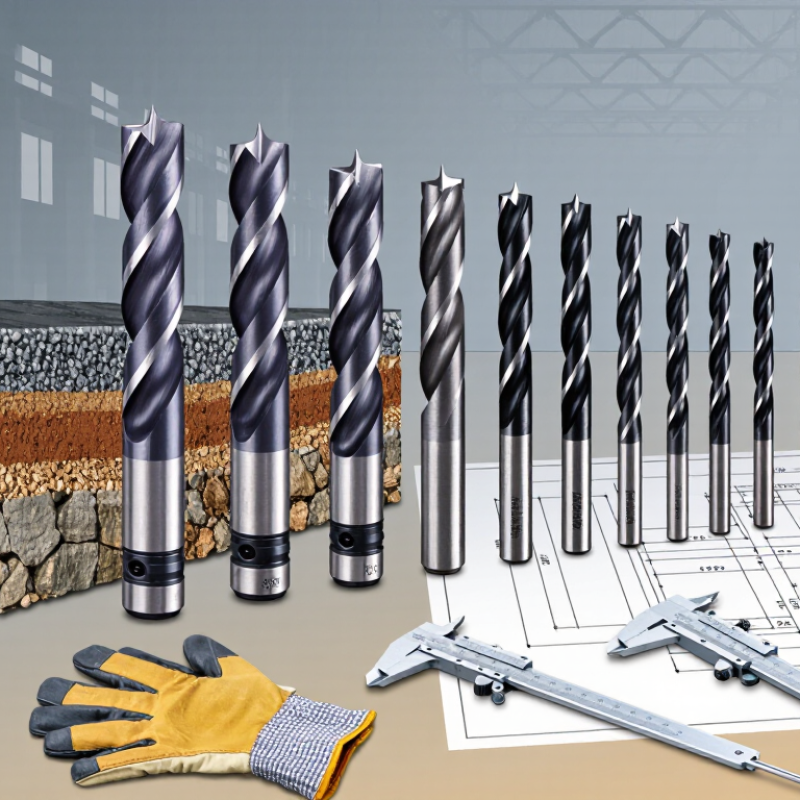
China Top Cable Drill Bit Manufacturers and Suppliers?

Understanding Cable Drill Bits and Their Applications

Cable drill bits are long drilling tools designed to create pathways for wires through framing, floors, and some wall cavities. Unlike ordinary short bits, their extended shafts can reach through deep timber members or confined spaces. Many have a small opening near the tip, allowing a pull wire to pass through after drilling. This saves a separate fishing step. Small details matter.

Their applications include routing electrical, data, and low-voltage cables in renovation or new construction. A flexible shaft can help navigate limited access, while a stiffer bit offers better control through thicker wood. Choose the length and diameter to suit the material and cable bundle; an oversized hole can weaken a member or leave unnecessary gaps. Check for pipes and existing wiring before drilling, and use a suitable guide or inspection opening when the route is uncertain.

In practice, the bit’s reach is useful, but it does not guarantee a straight path. Grain, knots, and shaft flex can shift the exit point. Start slowly, keep the drill aligned, and stop if resistance changes unexpectedly. Wear eye protection, clear debris from the hole, and avoid forcing the tool. I have seen cable routes become awkward because a small exit-position error was ignored early. A test opening may feel slower, yet it can prevent a much harder repair.

Common Types of Cable Drill Bits

Cable-tool drilling uses repeated impacts rather than continuous rotation, so bit shape affects how energy reaches the ground. A fishtail bit has a broad, tapered cutting edge and is commonly used in softer clay or loose formations. It can loosen material quickly, but may struggle where gravel or cobbles deflect the edge. Not in cobbles.

Chisel bits have a single straight edge for breaking moderately firm material. Cross bits carry two cutting edges at right angles, helping them work more evenly when the bit turns between impacts. Star bits use several points to spread impact across harder ground; they may need more careful inspection as the points wear. Check for rounded edges, cracks, and changes in bit diameter before use. Match the bit to the formation, cable-tool weight, and borehole size. That sounds simple, but ground layers can change within a short distance. Keep drilling notes and compare them with the cuttings; the best choice is not always obvious.

Common Types of Cable Drill Bits
Bit type Cutting material and design Typical formations Key characteristics Selection considerations
Impregnated diamond bit Small synthetic diamond particles are distributed through a metal matrix at the crown. Hard, abrasive, and fractured rock; commonly used in mineral-exploration coring. As the matrix wears, new diamond particles are exposed. Performance depends on matching the matrix and bit design to the rock and drilling conditions. Consider formation hardness and abrasiveness, water circulation, rotational speed, and the required core quality.
Surface-set diamond bit A single layer of natural or synthetic diamonds is set on the bit face. Generally suited to softer or less abrasive formations, depending on diamond grade and bit design. Exposed cutting points can provide efficient cutting in suitable ground, but the cutting layer is not renewed in the same way as an impregnated crown. Check the expected rock abrasiveness and hardness; avoid choosing solely by initial penetration rate.
PDC bit Polycrystalline diamond compact cutters are mounted on the bit face. Often used in softer to medium-hard, relatively homogeneous formations; suitability varies by cutter design and ground conditions. Shearing cutters can provide fast drilling in suitable formations. Impact, severe abrasiveness, or highly variable ground may shorten cutter life. Confirm compatibility with the coring system and assess formation stability, abrasiveness, and the risk of impact damage.
Tungsten-carbide bit Carbide inserts or buttons are attached to the bit face or cutting structure. Soft to medium formations and applications where an economical, robust cutting structure is appropriate. Carbide is wear-resistant and is used in various drilling tools; the exact design and performance depend on the bit configuration. Verify whether the bit is designed for coring or non-coring work, and match the insert shape and layout to the ground.
Roller-cone bit Rotating cones with teeth or inserts break the formation by crushing and, depending on design, scraping. Used in a range of formations with the appropriate tooth or insert configuration; commonly associated with non-coring drilling. The rolling cutters suit drilling methods that do not require a continuous cylindrical core sample. Confirm that the drilling method and objective call for a non-coring bit; it is not a direct substitute for a wireline core bit.
Note: “Cable drilling” can refer to different drilling methods. In wireline core drilling, bit choice depends on the core-barrel system, formation, circulation, and operating parameters. Confirm the intended drilling method and bit compatibility before ordering.

Key Capabilities of Chinese Manufacturers and Suppliers

Chinese cable drill bit manufacturers and suppliers may combine precision machining, heat treatment, and export coordination. Capabilities vary by factory, so assess documented processes rather than relying on catalog claims. Ask about bit-body steel, carbide grade, brazing consistency, and thread tolerances. Small details matter.

Request sample bits and inspect cutter edges under magnification. Compare dimensions and runout across several pieces, then review records for hardness and inspection results. Some suppliers can adjust cutter layouts or connection sizes for specific cable-tool systems, but custom work may extend lead times. Confirm requirements and delivery dates in writing. Samples first.

Reliable supply also depends on consistent raw materials, repeatable brazing, and packaging that protects cutters during transit. Useful technical support should explain wear patterns, feed pressure, and flushing needs in plain language. Not every supplier documents these points equally well; that gap deserves attention. A trial order can reveal whether sample quality holds up in regular production.

How to Compare Cable Drill Bit Suppliers in China

Comparing cable drill bit suppliers in China requires more than checking price per piece. Match the bit diameter, connection thread, and core-barrel system to your rig. Ask for drilling records in comparable rock, not just a hardness chart. A supplier should explain matrix selection, gauge protection, and expected wear in fractured or abrasive formations. Small details matter.

S&P Global Market Intelligence’s World Exploration Trends 2024 reported that global nonferrous exploration budgets reached about US$12.8 billion in 2023, down 3% year on year. That figure is not a bit-sales forecast, but it reflects a market where drilling efficiency and consumable costs matter. Request test data showing penetration rate, core recovery, and service life, with the rock type and operating conditions stated. Compare like with like. I still see buyers overlook whether test results came from field trials or controlled demonstrations.

Check quality records for batch traceability, dimensional inspection, and documented material checks. Ask how the supplier handles inconsistent core recovery or premature crown wear. A clear technical response is useful; vague promises are not. Confirm lead times, sample availability, packaging, and replacement terms in writing. USGS Mineral Commodity Summaries 2024 offers production context for mineral markets, but it cannot verify any individual supplier’s performance. Request references from comparable drilling projects, then confirm the details independently.

How to Compare Cable Drill Bit Suppliers in China

Suggested buyer scorecard: allocate 100 points across these evaluation criteria, then score each supplier using verifiable documents and test results. These weights are a practical framework, not market-survey data.

Compare like-for-like bit specifications and request evidence such as material certificates, inspection records, sample test results, and written warranty terms. Adjust the weights to match your drilling conditions and purchasing priorities.

Sourcing, Quality Standards, and After-Sales Support

China Top Cable Drill Bit Manufacturers and Suppliers?

Choosing a cable drill bit supplier starts with clear specifications. Share the drilling method, rock conditions, bit diameter, connection type, and expected service life. Ask how the supplier selects tooth geometry and materials for your application. Details matter. A sample may look excellent on a bench yet perform differently in abrasive or fractured ground, so request field references or a controlled trial where practical.

Quality checks should be specific, not just promises. Request dimensional inspection records, material or heat-treatment documentation, and batch traceability. Confirm that the connection fits your equipment and that cutting elements are firmly secured. Ask how wear, cracks, and runout are inspected before shipment. Compare samples against agreed drawings and acceptance criteria. A certificate alone is not enough; its scope and link to the delivered batch should be clear.

After-sales support is part of the purchase. Before ordering, agree on response times, spare-part availability, and the information needed to assess a failure. Keep photos, drilling conditions, operating hours, and return samples when possible. A supplier who asks careful questions can help identify whether wear came from the bit, the formation, or operating settings. Still, diagnosis is not always certain. Clear records make the discussion more useful and help guide the next order.

FAQS

How does cable-tool drilling differ from rotary drilling?

It uses repeated impacts instead of continuous rotation. Bit shape helps direct that force into the ground.

When is a fishtail bit useful?

Its broad, tapered edge can loosen soft clay and loose formations quickly. Gravel and cobbles may deflect it.

What are chisel, cross, and star bits designed for?

A chisel bit breaks moderately firm ground with one straight edge. Cross bits have two edges at right angles. Star bits spread impacts across harder ground.

How can I check a bit for wear?

Look for rounded cutting edges, cracks, and changes in diameter. Check carefully. Wear can be easy to miss.

How should I choose a bit for a borehole?

Match it to the formation, cable-tool weight, and borehole size. Ground layers can change within a short distance, so keep drilling notes and compare them with the cuttings.

What details should I share when asking a supplier for a bit?

Provide the drilling method, rock conditions, bit diameter, connection type, and expected service life. Ask how tooth geometry and materials suit the application.

What quality records should I request?

Request dimensional inspection records, material or heat-treatment documents, and batch traceability. Check that the connection fits and cutting elements are firmly secured.

Is a certificate enough to judge a bit’s quality?

Not by itself. Confirm its scope and link to the delivered batch, then compare samples with agreed drawings and acceptance criteria.

What should I agree on for after-sales support?

Set response times, spare-part availability, and the information needed to assess failures. Keep photos, operating hours, drilling conditions, and return samples when possible.

Can a supplier always identify why a bit wore out?

No. Wear may relate to the bit, the formation, or operating settings. Clear records help, but the diagnosis may still be uncertain.

Conclusion

This article explores the role of the Cable Drill Bit in cable drilling work, where the right bit can support efficient cutting, reliable performance, and consistent results across different ground conditions. It outlines common types of cable drill bits and explains how their designs and material choices suit different applications. Understanding these differences can help buyers identify products that match their equipment, project requirements, and expected operating conditions.

The article also reviews the capabilities to consider when evaluating manufacturers and suppliers in China, including production capacity, customization, material control, and product testing. It offers practical guidance for comparing suppliers by specifications, sample evaluation, communication, and delivery expectations. Finally, it highlights the value of clear sourcing arrangements, documented quality standards, and responsive after-sales support in building a dependable supply relationship.


Madeline

Madeline

Madeline is a dedicated marketing professional with a wealth of expertise in our company's core offerings. With a keen understanding of the industry, she brings a unique perspective to her role, consistently delivering high-quality content that highlights the superior aspects of our products. As......