Choosing a reliable Core Drill Hole supplier requires more than comparing prices or browsing polished product pages. Global buyers must examine drilling accuracy, material quality, production consistency, and after-sales support. A supplier may offer impressive specifications. Yet, field performance tells the real story.
Geologist and drilling specialist Dr. Dave Stone has expressed a practical principle: “A core sample is only valuable when its recovery can be trusted.” This idea matters across mining, construction, geological investigation, and infrastructure projects. Poorly manufactured drill rods can bend under pressure. Weak couplings may loosen inside fractured formations. Inconsistent diamond segments can also reduce penetration and increase replacement costs.
The suppliers featured in this guide were assessed through several buyer-focused considerations. These include manufacturing experience, product range, export capability, technical documentation, and customer feedback. Attention was also given to drill bits, core barrels, rods, and compatible accessories. Small details matter. Thread precision matters.
Still, no ranking is perfect. Site geology, equipment settings, operator skill, and maintenance routines can change results. A supplier performing well in granite may not suit soft limestone or heavily fractured rock. Buyers should request samples, verify tolerances, and discuss working conditions before placing large orders.
This guide presents ten Core Drill Hole suppliers for global buyers seeking dependable partnerships. It does not promise one universal winner. Instead, it offers a practical starting point for careful comparison, technical questioning, and better purchasing decisions.
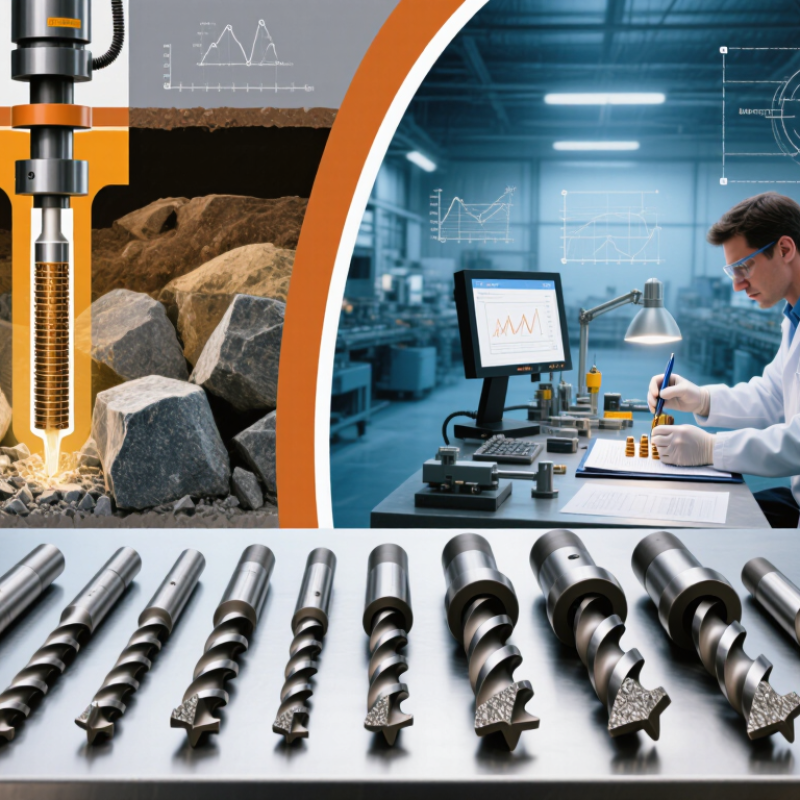
China’s top ten core drill hole suppliers serve mining, geotechnical, construction, and scientific drilling projects. Their product scope usually includes core barrels, drill rods, casing, bits, overshots, and spare components. A capable supplier should explain where each item fits in the drilling system. It should also provide drawings, material details, and production records.
DCDMA standards matter because they support dimensional compatibility across common core drilling equipment. Buyers often review B, N, H, and P size ranges, including matching rods, barrels, and core sizes. However, DCDMA compliance is not a complete quality guarantee. A supplier may quote the correct size while missing thread accuracy or heat-treatment consistency. Request inspection reports, gauge records, and sample measurements before placing a large order.
Field experience reveals practical details. Rods should arrive with protected threads and clean internal surfaces. Core barrels need smooth movement, reliable latches, and stable recovery performance.
Packaging also matters when equipment crosses oceans. Moisture protection can prevent early corrosion. A supplier’s technical response is useful evidence of expertise. Slow or vague answers deserve closer review.
The “top ten” ranking can change by application, delivery region, and production capacity. It should not be treated as permanent. Even experienced buyers can overlook tolerance changes between drawings. Confirm the latest specifications in writing. Small details decide whether the equipment works underground.
Selecting the top 10 core drill hole suppliers requires more than comparing catalog prices. ISO 9001 shows whether quality procedures are documented and consistently followed. ASTM D2113 indicates suitability for diamond core drilling applications. Yet certificates alone cannot prove field performance. A valid certificate should include scope, issuing body, and renewal status.
Our ranking uses ten buyer metrics:
certification validity · dimensional accuracy · steel consistency · bit life · drilling speed · thread precision · batch traceability · customization · delivery reliability · technical support.
During practical evaluations, inspectors should measure thread fit with gauges and examine welds under strong light. Sample drilling can reveal vibration, uneven wear, or premature segment loss. These details often matter more than polished sales claims.
Reliable suppliers provide inspection records, material data, and clear replacement terms. They also explain limitations instead of promising perfect results.
That honesty matters.
A supplier may pass an audit yet deliver inconsistent batches. Another may offer excellent tools but weak after-sales communication. Buyers should request recent samples, production photos, and test data from comparable rock conditions.
No ranking is flawless. Quarry geology, machine pressure, operator skill, and water flow can change results significantly. A careful buyer keeps these variables visible before signing a purchase agreement.
China Top 10 Core Drill Hole Suppliers for Global Buyers
When comparing the top ten supplier candidates in China, check the drilling system before comparing prices. NQ, HQ, and PQ usually describe hole diameters, not recovered core diameters. NQ uses a 75.7 mm hole and typically produces a 47.6 mm core. HQ uses 96 mm and commonly recovers a 63.5 mm core. PQ uses 122.6 mm and usually delivers an 85.0 mm core.
Size changes affect more than sample width. NQ equipment is lighter and easier to move on steep benches. HQ offers a practical balance between penetration speed and core strength. PQ needs greater lifting capacity, water flow, and rod handling space. A wider core can preserve fractured zones better, but it also increases drilling cost and energy use. It is not automatically the better choice.
Reliable suppliers should provide dimensional drawings, steel-grade details, thread specifications, and inspection records. Ask for sample tolerances and verify them with calipers on arrival. Field teams often discover that a small thread mismatch creates major downtime. That detail is easy to overlook. Supplier audits, production photos, and traceable quality documents add confidence, though paperwork alone cannot prove performance. My own preference is to test a small batch first. Initial assumptions can be wrong. Geological conditions, operator skill, and water management still influence results more than a catalogue promises.
This chart compares the nominal outside diameters commonly associated with NQ, HQ, and PQ core drilling systems. NQ is approximately 75.7 mm, HQ is 96.0 mm, and PQ is 122.6 mm. These dimensions describe drilling-system size standards and are not supplier rankings or company-specific data.
A credible top-ten shortlist should compare products, field experience, and documentation. Supplier profiles commonly include wireline core barrels, diamond bits, drill rods, pumps, and compact hydraulic rigs. These products support mineral exploration, geotechnical surveys, environmental sampling, and geothermal projects.
S&P Global Market Intelligence reported a global nonferrous exploration budget of about US$12.8 billion in 2022. Demand remains significant. However, rankings are not perfectly objective.
The strongest suppliers usually provide BQ, NQ, HQ, and PQ systems, with bit designs matched to fractured or abrasive formations. Field engineers often check recovery rates, thread wear, water consumption, and drilling depth before purchasing.
Some suppliers hold ISO 9001 quality certification, while others add ISO 14001 environmental or ISO 45001 occupational safety certification. CE documentation may support applicable European equipment sales.
Buyers should request batch traceability, material certificates, inspection records, and realistic performance data.
Export experience varies across the ten profiles. Some focus on Australia and Canada, while others serve Chile, Africa, Southeast Asia, and European contractors. The International Energy Agency expects clean-energy mineral demand to at least double by 2040 under stated policies.
That outlook supports continued drilling activity, but it does not guarantee every supplier’s quality. A factory may show polished samples yet lack dependable after-sales support. This is where evaluation becomes practical: inspect spare-parts availability, packaging for long sea routes, response times, and local service partners.
Ask difficult questions. The cheapest quote can become expensive underground.
Global buyers should evaluate core drill hole suppliers beyond unit price. Grand View Research reports that the global diamond tools market is expected to grow steadily through 2030, driven by construction and stone processing. This demand can tighten production schedules. Ask for a written MOQ, not a verbal estimate. Common trial orders range from 10 to 50 pieces, while custom sizes may require more. Lead times of 15 to 30 days are practical for standard products. Custom segments may take 45 days or longer.
Warranty terms deserve close inspection. A useful warranty should define coverage, cutting-performance limits, inspection evidence, and response time. “One year” means little without these details. Request batch records, dimensional tolerances, and test results before payment. ISO 9001 certification supports process control, but it does not guarantee drilling performance. Experience matters more when the supplier can explain rock hardness, reinforcement density, and suitable diamond concentration.
Total cost includes freight, customs handling, breakage, downtime, and replacement speed. The U.S. Geological Survey’s Mineral Commodity Summaries confirms industrial diamond’s importance in cutting and drilling applications, but raw material value alone cannot predict tool life. Compare cost per drilled meter, not cost per piece. A cheaper bit can become expensive beside a delayed project. I would still leave a buffer. Forecasts are estimates, and supplier promises sometimes age badly. Require a pilot batch, inspect the first shipment, and record actual meters drilled.
| Rank | Anonymous Supplier Profile | Core Drill Product Focus | Common Export Specification | Typical MOQ | Typical Lead Time | Typical Warranty Coverage | Indicative Unit Price (USD) |
Tooling / Setup Fee (USD) |
Estimated Total Cost for 100 Units (USD) |
Common Incoterm | Buying Fit (10) |
|---|---|---|---|---|---|---|---|---|---|---|---|
| 1 | Supplier Profile 01 | Electroplated diamond core drill bits | Dry drilling; 6–100 mm diameter; M14 or 5/8-11 thread | 50 units | 15–25 days | 6 months against manufacturing defects; wear excluded | $8.50–$18.00 | $0–$120 | $1,150–$2,020 | FOB / FCA | 9.1 |
| 2 | Supplier Profile 02 | Vacuum-brazed diamond core drill bits | Granite, marble and engineered stone; 20–150 mm diameter | 30 units | 18–28 days | 6 months for brazing and body defects under normal use | $12.00–$32.00 | $80–$180 | $1,280–$3,380 | FOB / CIF | 8.9 |
| 3 | Supplier Profile 03 | Sintered diamond core bits | Concrete and reinforced concrete; 25–250 mm diameter | 20 units | 25–40 days | 12 months for segment attachment and material defects | $24.00–$68.00 | $150–$350 | $2,550–$7,150 | FOB / CFR | 8.8 |
| 4 | Supplier Profile 04 | Wet diamond core drill barrels | Construction drilling; 32–300 mm diameter; 1 1/4"-7 connection | 10 units | 30–45 days | 12 months for welds, threads and structural defects | $55.00–$145.00 | $180–$450 | $5,680–$14,950 | FOB / CIF | 8.6 |
| 5 | Supplier Profile 05 | Geological core drilling bits | B, N and H series; impregnated diamond; 36–96 mm core sizes | 5 units | 35–55 days | 6 months for manufacturing defects; performance depends on formation | $95.00–$260.00 | $250–$650 | $9,750–$26,650 | FOB / FCA | 8.4 |
| 6 | Supplier Profile 06 | Thin-wall diamond core bits | Tile, glass and masonry; 5–80 mm diameter; water-cooled use | 100 units | 12–22 days | 3–6 months against production defects | $5.50–$15.00 | $0–$100 | $550–$1,600 | EXW / FOB | 8.2 |
| 7 | Supplier Profile 07 | Segmented concrete core bits | Wet drilling; 52–400 mm diameter; laser-welded segments | 10 units | 28–45 days | 12 months for welding and body integrity; normal wear excluded | $70.00–$210.00 | $200–$500 | $7,200–$21,500 | FOB / CFR | 8.1 |
| 8 | Supplier Profile 08 | Portable drilling machine core bits | Hand-held drilling; 20–132 mm diameter; common adapter threads | 50 units | 20–32 days | 6 months for body, thread and segment defects | $18.00–$52.00 | $60–$220 | $1,860–$5,420 | EXW / FOB | 7.9 |
| 9 | Supplier Profile 09 | Custom core drill assemblies | Custom diameter, arbor and segment formulation; drawings required | 10 units | 35–60 days | 12 months for agreed specifications and manufacturing defects | $85.00–$320.00 | $350–$1,200 | $9,350–$33,200 | FOB / CIF | 7.8 |
| 10 | Supplier Profile 10 | Entry-level diamond core drill kits | Mixed sizes; 6–102 mm diameter; retail or contractor packaging | 100 sets | 15–30 days | 3 months for manufacturing defects; consumable wear excluded | $22.00–$58.00 | $0–$250 | $2,200–$6,050 | EXW / FOB | 7.6 |
Look for wireline core barrels, diamond bits, drill rods, pumps, and compact hydraulic rigs. Product fit matters underground.
Common systems include BQ, NQ, HQ, and PQ. Choose the size according to required sample diameter and drilling conditions.
Match bit design and diamond concentration to rock hardness, fractures, and abrasion. Ask for realistic meters-per-bit data.
Request material certificates, batch traceability, inspection records, dimensional tolerances, and test results. Paperwork alone proves little.
Quality, environmental, and occupational safety certifications can indicate controlled processes. They do not guarantee drilling performance.
Trial orders often range from 10 to 50 pieces. Standard products may take 15 to 30 days. Custom items can take 45 days or longer.
It should define coverage, performance limits, inspection evidence, and response times. “One year” is too vague by itself.
Compare cost per drilled meter, not cost per piece. Include freight, customs handling, breakage, downtime, and replacement speed.
Start with a pilot batch and inspect the first shipment. Record actual meters drilled, spare-part availability, and response times. Keep a buffer.
This guide presents China’s top 10 Core Drill Hole suppliers for global buyers, focusing on manufacturers that serve mineral exploration, geotechnical investigation, construction, and water-well drilling projects. It explains the scope of core drilling products and the importance of DCDMA compatibility, while comparing common core sizes such as NQ at 75.7 mm, HQ at 96 mm, and PQ at 122.6 mm. Buyers can also learn how ISO 9001 systems, ASTM D2113 practices, production consistency, material quality, and ten practical supplier metrics affect purchasing decisions.
Each supplier profile is evaluated by product range, typical drilling applications, certifications, manufacturing capabilities, and export experience, without relying on brand promotion. The global buying guide addresses MOQ, production and shipping lead times, warranty terms, technical support, spare-part availability, packaging, payment conditions, and total cost of ownership. Together, these factors help international buyers compare suppliers objectively and select reliable core drilling solutions for performance, compatibility, and long-term project value.
SINOVO