What Is the Best Tunnel Drilling Machine in 2026?

Time:2026-10-30 Author:Sienna
0%

Choosing the best tunnel drilling machine in 2026 is not a simple brand comparison. The right choice depends on geology, tunnel diameter, alignment, groundwater, and the worksite’s access. A machine suited to hard, stable rock may struggle in fractured ground or mixed soil. Small details matter. A narrow access road, for example, can affect equipment delivery and assembly before excavation begins.

This guide examines key options through practical criteria: ground adaptability, cutterhead design, thrust capacity, steering accuracy, maintenance needs, and available technical support. It also considers operating costs and project disruption, since purchase price alone rarely tells the full story. Tunnel Drilling technology continues to develop, but new features do not automatically make a machine the best fit. Reliable specifications, documented project experience, and advice from qualified engineers deserve more weight than promotional claims. I should be clear: without site investigation data, no comparison can name one universal winner. Even a strong shortlist may change after borehole results arrive. That uncertainty is worth acknowledging. The following sections explain how to assess machines against real project demands, what trade-offs to watch for, and which questions to ask suppliers before making a decision.
What Is the Best Tunnel Drilling Machine in 2026?

What Is a Tunnel Drilling Machine?

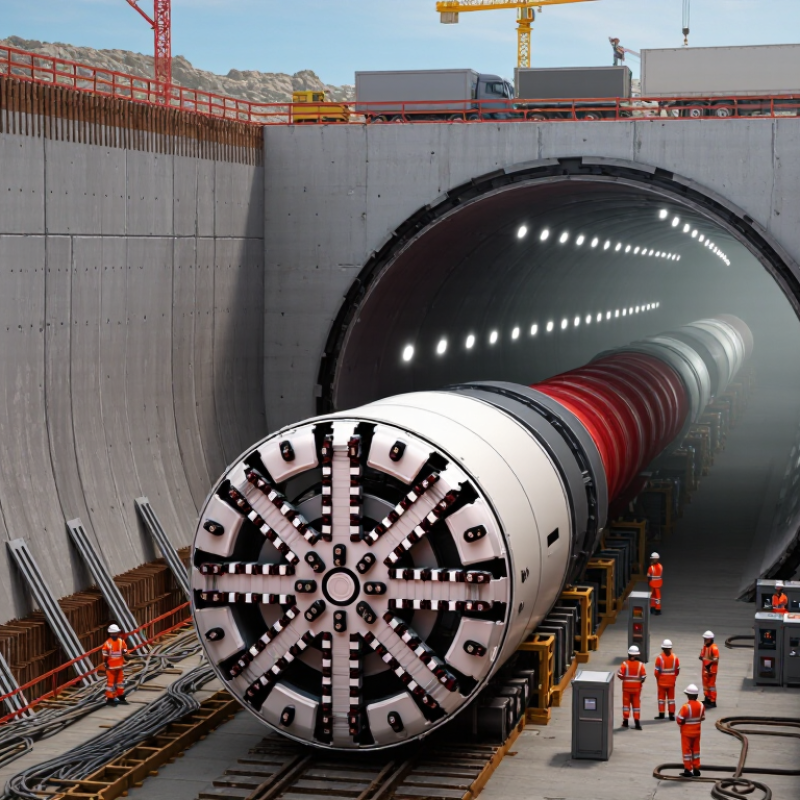
A tunnel drilling machine, usually called a tunnel boring machine (TBM), excavates a tunnel while managing ground directly around the cutting face. Its rotating cutterhead breaks soil or rock; conveyor belts or slurry systems carry away spoil. Depending on ground conditions, a shield may support the excavation as workers install precast lining segments behind the machine. It is more than a large drill.

The Federal Highway Administration’s 2009 Technical Manual for Design and Construction of Road Tunnels describes TBMs ranging from about 1 to 15 meters in diameter. That range shows why “best” depends on the project. Engineers assess rock strength, groundwater pressure, tunnel diameter, alignment, and spoil-removal access before selecting a machine configuration. A cutterhead suited to hard rock may perform poorly in saturated soil. Site data can still be incomplete, so assumptions need ongoing review during excavation.

Tips: Check the ground investigation and water conditions before comparing machines. Ask how the cutterhead, lining system, and spoil handling fit the site. Small details matter.

What Is the Best Tunnel Drilling Machine in 2026?

A tunnel boring machine (TBM) excavates a tunnel using a rotating cutterhead. The best type depends on ground conditions, groundwater, tunnel diameter, and project requirements.

The ranges shown are indicative of common project diameters, not fixed machine limits. Actual capabilities vary by design and ground conditions. EPB machines are often suited to soft, mixed, or urban ground; slurry machines to water-bearing ground; and hard-rock machines to competent rock.

How Does a Tunnel Drilling Machine Work?

A tunnel boring machine advances by cutting the ground at its face. Its rotating cutterhead carries discs or teeth that crush rock or scrape soil. Behind it, a conveyor or screw conveyor carries spoil away. Hydraulic jacks push the machine forward against concrete segments installed inside the tunnel. The segments form a supporting ring, while grout fills the gap between the lining and surrounding ground. Small steps, repeated continuously.

Ground conditions shape the method. In soft, water-bearing soil, an earth-pressure-balance machine controls pressure by managing the excavated material inside its chamber. A slurry machine instead circulates pressurized fluid to support the face and transport spoil. FHWA’s Technical Manual for Design and Construction of Road Tunnels describes these methods and emphasizes matching the system to geology and groundwater. A poor match can mean settlement above the tunnel or costly delays below it.

The scale is substantial: published Crossrail project data records eight tunnel boring machines excavating about 42 kilometers of tunnels in London. Each machine still depends on careful monitoring of pressure, torque, advance rate, and spoil flow. Operators watch those readings alongside ground movement. It is controlled work, but not perfectly predictable. Soil can change over a short distance, and a clean dashboard does not remove uncertainty.

Which Machine Types Suit Different Ground Conditions?

The best tunnel drilling machine in 2026 depends less on a headline specification than on what lies ahead of the cutterhead. In competent, abrasive rock, a hard-rock TBM with grippers can press against the tunnel walls and advance steadily. Where rock is fractured or support is needed close behind the face, a shielded hard-rock machine may offer better control. Small detail, big consequence.

Soft, cohesive soils often suit an earth-pressure-balance machine. It uses excavated soil to help stabilize the face, which can reduce settlement beneath streets and buildings. Loose, water-bearing sand is different. A slurry machine can balance groundwater pressure while carrying spoil away through pipes. Ground rarely stays uniform, though. A change from clay to gravel can slow a machine and complicate spoil handling.

For short drives, irregular alignments, or mixed excavation tasks, a roadheader may be more adaptable than a full-face TBM. It cuts with a rotating boom, but hard, abrasive rock can wear its tools quickly. No machine type is a safe choice from soil labels alone. Borehole logs, groundwater readings, and expected settlement all matter; even careful ground models can miss local surprises. A little humility belongs in the selection.

How Do Leading Tunnel Drilling Machines Compare in 2026?

Comparing leading tunnel boring machines in 2026 is less about finding a universal winner than matching the machine to the ground. FHWA’s 2009 Technical Manual for Design and Construction of Road Tunnels describes distinct approaches for different conditions: earth-pressure-balance machines support soft, water-bearing faces with conditioned excavated soil, while slurry machines use pressurized fluid. Open-face and gripper machines are generally suited to stable rock. Different ground. Different risks.

Crossrail Learning Legacy reports that eight TBMs excavated about 42 kilometres of new rail tunnels in London. That project scale shows why diameter alone is a poor comparison. For a real selection, engineers also assess face pressure control, cutter replacement time, spoil removal, curve radius, and the space available for launch shafts. A high excavation rate means little if maintenance stops or surface settlement become the bottleneck.

Published project figures are not always directly comparable: geology, tunnel diameter, and downtime can differ sharply. That makes rankings easy to overstate. One useful comparison is how each machine handles the project’s specific ground and operating constraints, backed by site investigation and maintenance plans. I would still treat any single “best” claim cautiously. A neat ranking can hide messy ground.

What Is the Best Tunnel Drilling Machine in 2026? — How Do Leading Tunnel Drilling Machines Compare?

Machine type Best-suited ground conditions Face support and groundwater Key strengths Main limitations Best-fit applications
Earth Pressure Balance (EPB) TBM Soft ground such as clay, silt, and mixed soils; performance depends on suitable soil conditioning. Excavated soil is conditioned and kept under pressure in the chamber to help support the face. Can manage groundwater when designed for the required pressure and ground conditions. Controls ground movement in many urban settings; excavated material can be removed continuously by screw conveyor. Ground conditioning and spoil handling require careful control. Very coarse or highly permeable ground may need special measures or another machine type. Urban metro tunnels, utility tunnels, and other soft-ground drives where settlement control is important.
Slurry Shield TBM Water-bearing, granular, or permeable soils, including ground where face stability is difficult to maintain. Pressurized slurry supports the excavation face; a separation plant processes the slurry and excavated material at the surface. Provides effective face support in challenging water-bearing ground and can handle high groundwater pressures when properly designed. Requires slurry circulation and separation equipment, a substantial surface plant, and careful management of slurry and spoil. Deep urban tunnels and river crossings through water-bearing sand, gravel, or mixed granular ground.
Open Gripper Hard-Rock TBM Competent, self-supporting rock that can provide reliable reaction for the machine’s grippers. Generally excavates without pressurized face support. Groundwater control and support measures depend on rock conditions and inflows. Can advance efficiently in suitable stable rock and provides room for flexible rock-support methods. Not suited to unstable ground where the walls cannot safely support gripper forces; changing geology can disrupt progress. Long tunnels in strong, relatively stable rock, including transport and water-conveyance tunnels.
Single-Shield TBM Fractured or weaker rock where the tunnel needs continuous support behind the cutterhead. The shield protects the working area; precast segmental lining is typically erected within the shield. It is not a pressurized soft-ground face-support system. Provides a protected environment for excavation and lining in ground that cannot reliably provide gripper reaction. Advance is tied to lining installation; it is generally less adaptable than a double-shield machine in consistently competent rock. Rock tunnels with weak or fractured sections where segmental lining is required for support.
Double-Shield TBM Primarily competent rock, with some ability to work through weaker sections using a different operating mode. Can grip the rock and erect lining concurrently in suitable conditions; in less competent ground it can operate in single-shield mode while lining is installed. Concurrent excavation and lining can support high advance rates in suitable geology; offers more operating flexibility than an open gripper TBM. Complex and costly to operate; its productivity advantage is reduced when ground conditions require frequent single-shield operation. Long rock tunnels with mostly competent geology and sections that require segmental lining.

Selection note: There is no universally best tunnel boring machine. The appropriate choice depends on geology, groundwater pressure, tunnel diameter and length, alignment, settlement limits, lining design, spoil logistics, and project-specific risk.

What Factors Determine the Best Machine for a Project?

The best tunnel drilling machine in 2026 depends on the ground, tunnel design, and working conditions—not a single headline specification. Start with geological reports, then check for mixed ground, groundwater, and abrasive rock. A machine suited to stable rock may struggle in soft, changing soil. The tunnel’s diameter, length, curve radius, and required alignment also shape the choice. Small access shafts or tight launch areas can rule out equipment that looks ideal on paper.

Compare advance rate with the project’s support and removal needs. A powerful cutterhead is useful, but only if muck handling, ventilation, and maintenance can keep pace. Review expected downtime, cutter replacement access, and available operators. Ask for performance records from projects with similar geology and dimensions. Estimates still carry uncertainty; ground conditions can change between survey points. That detail is easy to underestimate. A careful review should include contingency time and a plan for monitoring settlement and machine performance.

Tips: Match cutterhead and support systems to verified ground data. Check service access before choosing. Keep a realistic schedule buffer. One overlooked constraint can matter more than extra power.

FAQS

What is a tunnel boring machine?

A tunnel boring machine excavates a tunnel while supporting the ground near its cutting face. It is more than a large drill.

How does a tunnel boring machine cut through ground?

A rotating cutterhead uses discs or teeth to crush rock or scrape soil. Hydraulic jacks push the machine forward. Small steps, repeated continuously.

How is excavated material removed?

Conveyor belts or screw conveyors carry spoil away. Some machines use pressurized slurry to transport it through pipes.

How do engineers choose a machine?

They consider ground strength, groundwater pressure, tunnel size, alignment, and spoil-removal access. A hard-rock cutterhead may struggle in saturated soil.

How does a machine support a tunnel?

Workers install precast concrete segments behind the machine. The segments form a supporting ring, and grout fills the surrounding gap.

What happens in soft, water-bearing ground?

An earth-pressure-balance machine manages excavated soil inside its chamber. A slurry machine uses pressurized fluid to support the tunnel face. The match matters.

What do operators monitor during excavation?

They track pressure, torque, advance rate, spoil flow, and ground movement. Readings help, but they cannot remove all uncertainty.

What problems can occur if ground conditions change?

A poor machine match may cause surface settlement or costly delays. Soil can change over a short distance. Site assumptions need regular review.

Conclusion

A tunnel drilling machine is a specialized system that excavates underground passages while helping support and stabilize the surrounding ground. It typically advances through a rotating cutting head, removes excavated material, and may install support elements as work progresses. The right design depends on the ground: hard rock, soft soil, mixed formations, and water-bearing conditions each place different demands on cutting tools, thrust, ground control, and spoil removal.

In 2026, no single machine is best for every project. Comparing machine types means weighing their performance, adaptability, safety features, maintenance needs, and ability to handle changing ground conditions. The best choice for a project also depends on tunnel dimensions, route length, schedule, access, site constraints, and total operating cost. Careful planning and matching the equipment to the geology can make Tunnel Drilling more predictable, efficient, and reliable.

Sienna

Sienna

Sienna is a skilled marketing professional with a deep expertise in our company’s core products and services. With a passion for innovation and detail, she plays a pivotal role in crafting insightful blog posts that not only highlight the unique features of our offerings but also provide valuable......