Choosing the best Big Drill Bits from China requires more than comparing prices or reading product labels. Buyers must examine steel grade, flute design, heat treatment, shank accuracy, and the intended drilling material. A bit made for mild steel may perform poorly in cast iron, hardwood, or masonry. That difference matters on a busy workshop floor, where vibration, heat, and worn cutting edges quickly reveal weak manufacturing.
Chinese manufacturers offer a wide range of large-diameter drill bits, from high-speed steel twist drills to cobalt-alloy and carbide-tipped designs. Some factories provide detailed inspection reports, sample testing, and custom dimensions. Others provide limited technical information. That gap deserves attention. Product photos can look convincing, but performance depends on tolerances, coating quality, edge symmetry, and inspection consistency. Experienced users should request material certificates, hardness data, runout measurements, and practical test results before placing a large order.
Real-world testing remains essential. A reliable comparison should record drilling speed, hole accuracy, cutting temperature, tool life, and surface finish. It should also consider packaging and delivery protection, because a damaged cutting edge can ruin an otherwise capable tool. No single Chinese supplier is ideal for every application. The best choice depends on machine power, workpiece material, production volume, and maintenance standards. Even careful recommendations may need revision after independent trials. That is the honest part. Performance can vary between batches, and a promising sample does not always represent long-term production quality.
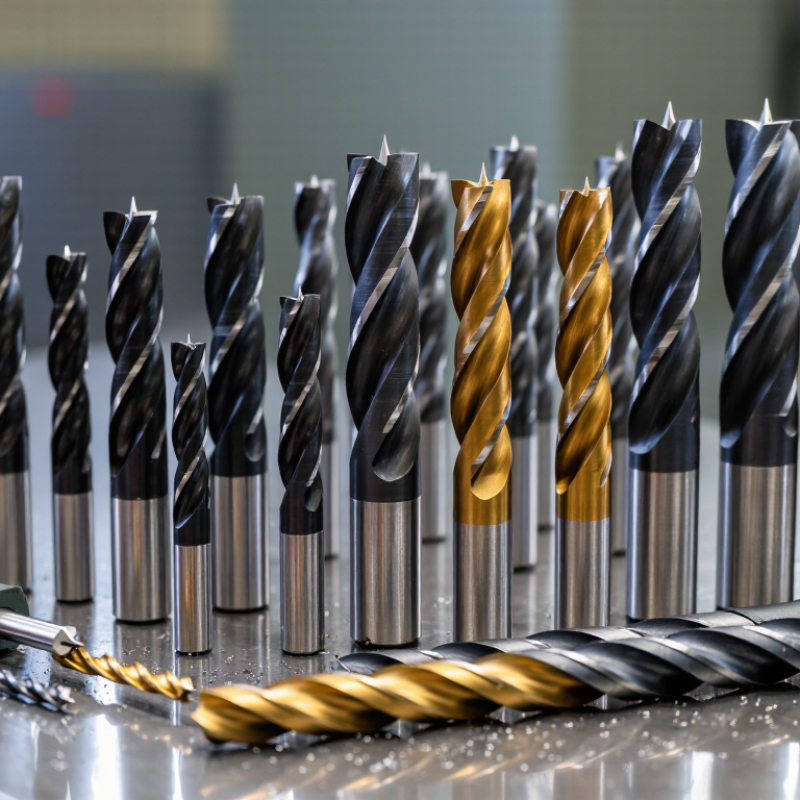
What Are the Best Big Drill Bits From China?
Big drill bits are cutting tools designed to create wide, deep, or high-volume holes in solid materials. In practice, “big” often means a diameter above 20 millimeters, although the exact range depends on the industry. Larger bits usually require stronger machines, lower operating speeds, and better control of heat and vibration.
Their main applications include construction, mining, metal fabrication, agriculture, and heavy equipment maintenance. A wide masonry bit may prepare openings for anchors in concrete walls. A long twist bit can pass through thick steel plates, while an auger bit removes wood chips from large timber sections. In mining and geotechnical work, specialized drilling tools create holes for sampling, support systems, or controlled ground investigation.
Selecting large drill bits from China requires more than checking diameter and price. Experienced buyers examine the steel grade, tip design, flute geometry, surface treatment, and manufacturing tolerance. These details affect cutting stability and service life. Clear inspection records, sample testing, and accurate product drawings improve reliability. It is also wise to match the bit with the machine’s power and chuck capacity. A bit that looks suitable may still perform poorly under excessive pressure. I have found that cooling methods are often overlooked, especially when drilling thick metal. That mistake can damage both the tool and the workpiece. Good results come from a balanced choice, not the largest available size.
| Big Drill Bit Type | Definition and Typical Diameter | Common Bit Materials | Main Applications | Key Selection Factors |
|---|---|---|---|---|
| Large HSS Twist Drill | A helical-point drill generally used for larger holes, commonly about 20–80 mm in diameter. Larger sizes often use a reduced-shank design. | High-speed steel, cobalt-alloy high-speed steel, or carbide-tipped designs. | Steel plates, aluminum, cast iron, fabrication work, and general machine-shop drilling. | Workpiece hardness, drill press capacity, cutting speed, coolant availability, and required hole accuracy. |
| Annular Cutter | A hollow cutter that removes only a ring of material, typically producing holes of approximately 12–100 mm while using less cutting power than a solid drill of similar diameter. | High-speed steel, cobalt-alloy steel, or carbide-tipped teeth. | Structural steel, beams, rails, metal fabrication, and portable magnetic-drill operations. | Material thickness, cutter-to-arbor compatibility, pilot pin design, tooth geometry, and machine stability. |
| Bi-Metal Hole Saw | A cylindrical toothed saw for large openings, commonly available from about 20–200 mm in diameter. | Flexible alloy-steel body with high-speed-steel cutting teeth. | Thin sheet metal, stainless steel, wood, plastic, electrical panels, plumbing, and HVAC installations. | Cutting depth, tooth pitch, arbor size, material thickness, and whether the application requires clean or fast cuts. |
| SDS-Max Masonry Drill | A large shank drill for rotary-hammer machines, commonly used in diameters of about 12–52 mm for deep masonry holes. | Alloy-steel body with carbide cutting tips or multi-cutter carbide heads. | Concrete, brick, blockwork, stone, anchor holes, utility penetrations, and construction installation work. | Concrete strength, reinforcement exposure, drilling depth, vibration control, dust removal, and shank compatibility. |
| Diamond Core Drill Bit | A hollow cylindrical bit with diamond segments or diamond-impregnated matrix, commonly covering approximately 20–600 mm depending on the equipment. | Steel core barrel with synthetic diamond segments or diamond-impregnated cutting matrix. | Reinforced concrete, masonry, natural stone, asphalt, pipe penetrations, ventilation openings, and laboratory sampling. | Wet or dry cutting method, aggregate hardness, reinforcement density, segment specification, motor power, and cooling requirements. |
| Large Auger Wood Bit | A screw-point bit with a spiral flute for producing large holes in wood, frequently available from about 20–50 mm in diameter. | Carbon steel, alloy steel, or heat-treated tool steel. | Timber framing, furniture production, beams, utility holes, and general carpentry. | Wood species, moisture content, drilling depth, shank design, chip evacuation, and available torque. |
| Earth Auger Bit | A helical ground-drilling tool for creating broad holes, commonly ranging from about 50–300 mm in diameter. | Alloy-steel flighting with hardened cutting edges or replaceable teeth. | Fence posts, landscaping, agriculture, soil sampling, foundation preparation, and small-scale ground work. | Soil type, gravel content, moisture, required depth, drive torque, tooth replaceability, and equipment connection. |
| Step Drill for Large Sheet Holes | A cone-shaped bit with multiple cutting steps, usually covering several hole sizes in one tool and commonly reaching about 40–50 mm. | High-speed steel, often with a surface coating such as titanium-based coating for improved wear resistance. | Thin sheet metal, electrical enclosures, ductwork, plastic panels, and light fabrication. | Maximum diameter, sheet thickness, edge condition, coating, drilling speed, and the need for multiple hole sizes. |
Check edge sharpness, flute shape, chip removal, and entry smoothness. Start slowly. Clean, steady chips usually indicate suitable cutting geometry.
Vibration may indicate poor balance, incorrect speed, weak alignment, or unsuitable machine pressure. Stop and inspect the setup before forcing the bit.
Drill repeated holes and inspect edge rounding, coating wear, and chipped areas. One successful hole proves very little. Test samples.
Cutting oil reduces heat and friction, but it cannot repair a dull edge. Blue chips may show overheating during drilling.
Confirm hole diameter, drilling depth, shank size, chuck capacity, machine torque, and rated bit weight. A powerful bit can still fail on a weak machine.
High-speed steel suits many steel tasks. Carbide-tipped cutters handle harder alloys. Masonry requires a compatible core bit, cooling, and dust control.
Request material certificates, heat-treatment records, hardness results, dimensional drawings, runout tolerances, and batch inspection reports. Photos are not enough.
Ask for penetration rate, wear distance, torque behavior, and failure analysis. The report should identify material, machine power, cooling, and test conditions.
A trial order reveals alignment problems, weak packaging, slow technical support, or fast edge wear. I once focused on diameter and missed the pilot drill. That mistake was avoidable.
Big Drill Bits are essential tools for creating large, accurate holes in construction, mining, manufacturing, woodworking, and heavy-duty maintenance. This article explains what defines a large drill bit and how different designs support specific applications. It compares common Chinese drill bit types, including twist, core, step, and hole saw designs, while examining materials such as high-speed steel, carbide, and coated alloys. Attention is also given to available sizes, shank styles, and machine compatibility.
The discussion evaluates cutting performance, heat resistance, wear durability, precision, and service life, helping readers understand how material quality and geometry affect results. It also reviews general product standards and manufacturing considerations without focusing on specific brands. Finally, the article provides practical guidance for choosing the best Big Drill Bits according to workpiece material, hole diameter, operating speed, equipment capacity, production volume, and budget. Proper selection can improve efficiency, reduce tool replacement, and deliver safer, more consistent drilling performance.

 SINOVO